30.04.2026 – Lost, shortly after it has been found
May 7, 2026
Of meadows and forests
May 8, 2026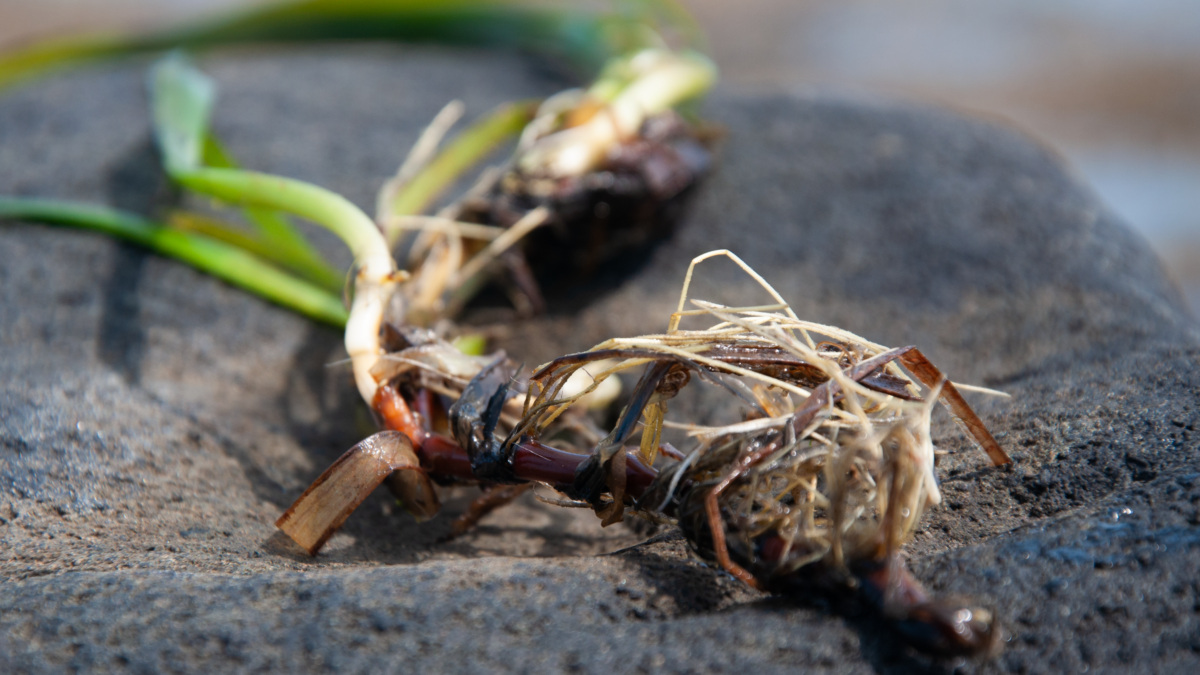
Photo credit: Eva Koehle
At first glance, seagrass may seem unremarkable—but beneath the surface lies one of the ocean’s most intriguing plants. In fact, seagrass is not an algae, but a true flowering plant that once lived on land and returned to the sea millions of years ago. It has roots, leaves, and even tiny flowers—and yes, it can actually bloom underwater.
One of its most curious traits: seagrass performs photosynthesis just like land plants, producing oxygen in the process. Some seagrass meadows are among the most efficient carbon sinks on Earth, capable of storing carbon in the seabed for centuries.
Even more astonishing is its reproduction: some species release pollen-like structures into the water, which are carried by currents to other plants—an underwater form of pollination. In addition, seagrass can reproduce clonally, meaning entire meadows can be genetically identical. In Australia, a seagrass clone was discovered stretching about 180 kilometers—possibly one of the largest living organisms on the planet.
Seagrass is also vital for marine life: it serves as a nursery for fish, a food source for sea turtles, and even a hiding place for tiny seahorses. A quiet hero, performing remarkable feats beneath the waves.
By Fatima Kutzschbach