BWB – Volcanic Pools and Their Formation
May 14, 2026
11.05.2026 – One successful and dry trip
May 17, 2026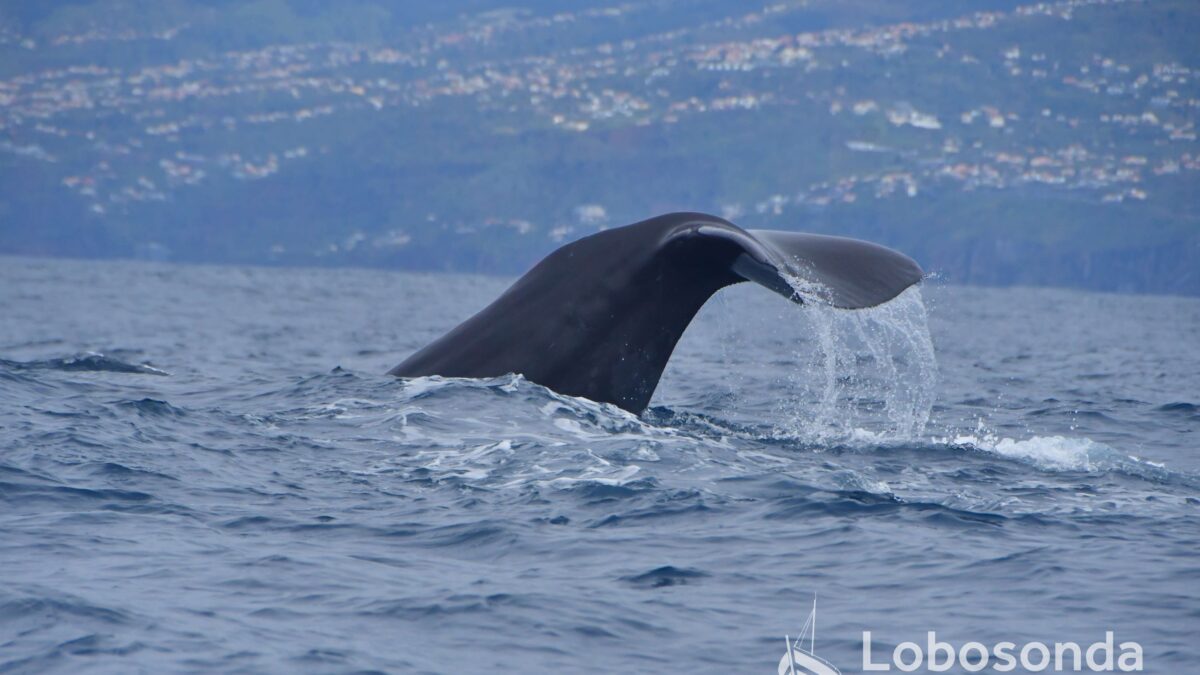
The dive of a Sperm whale is one of the most remarkable processes in the animal kingdom. Sperm whales are the largest toothed whales on Earth and highly specialized deep-sea divers. When a sperm whale dives, a highly complex biological process begins that allows the animal to withstand extreme depths and long periods without breathing. Before descending into the depths, a sperm whale usually remains at the surface for several minutes. During this time, it breathes calmly and regularly several times. With every breath, oxygen is absorbed and stored within the body. Unlike humans, whales store most of their oxygen not in their lungs, but in their blood and muscles. Their muscles contain particularly high amounts of the oxygen-binding protein myoglobin, which gives the tissue its dark coloration.
Shortly before the actual dive, the whale’s behaviour often changes. The Sperm whale raises its fluke clearly out of the water and then slowly begins to descend into the depths. This moment is often referred to as “fluking” and is typical of longer deep dives. After that, the animal disappears completely beneath the surface. During the descent, the body works with extraordinary efficiency. The heart rate slows down significantly in order to conserve oxygen. At the same time, blood circulation is concentrated on vital organs such as the brain and heart. Other parts of the body receive only limited oxygen supply during the dive.
During hunting dives, Sperm whales frequently reach depths of several hundred to more than one thousand meters. Individual whales have even been recorded at depths greater than 2,000 meters. Down there, complete darkness prevails. Sunlight no longer reaches these parts of the ocean. In addition, pressure and cold increase dramatically with depth. The water pressure at such depths is enormous and would be life-threatening for many other living creatures. Sperm whales, however, possess numerous adaptations that allow them to survive under these extreme conditions. Their bodies are flexible enough to withstand the immense pressure. In particular, the lungs and other air-filled spaces can collapse during descent, helping to prevent pressure-related injuries.
In the deep sea, the true purpose of the dive begins: the search for food. Sperm whales feed mainly on squid and large deep-sea fish. Giant squid and other large squid species are among their preferred prey. Since visibility is extremely limited in the darkness, sperm whales navigate using echolocation. They produce very powerful clicking sounds that travel through the water and reflect off surrounding objects. From the returning echoes, the whale can gather information about the distance, size, and movement of potential prey. The clicks of Sperm whales are among the loudest biological sounds in the animal kingdom.
Depending on the situation, a dive may last between around 30 minutes and more than an hour. During this time, the whale remains completely underwater. Only when its oxygen reserves begin to run low does it return to the surface. The ascent is also controlled and energy-efficient. Once the Sperm whale surfaces again, it begins breathing calmly several times. Carbon dioxide is released and fresh oxygen is absorbed. After a recovery phase at the surface, the next deep dive may begin.
The ability of Sperm whales to descend into extreme depths makes them one of the best-adapted marine mammals in the world. Even so, many aspects of their lives in the deep sea are still only partially understood. Much of their hunting and communication behaviour takes place in regions of the ocean that remain difficult for humans to access. Every dive of a sperm whale therefore leads into a world that is still considered one of the most mysterious habitats on our planet.
By Fatima Kutzschbach