BWB – The Ocean’s caregivers
November 15, 2026
13.11.2026 – Zino
November 18, 2026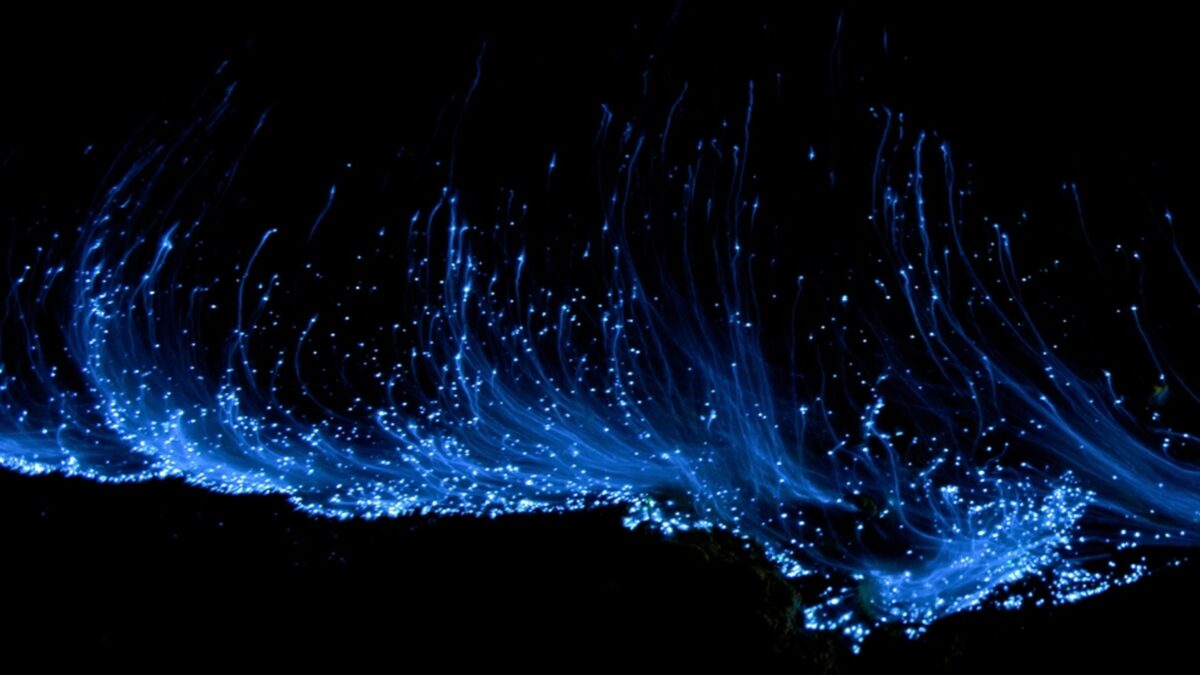
Although bioluminescence is not a commonly reported natural spectacle in Madeira, it is one of the most fascinating phenomena found in oceans around the world. Imagine standing on a quiet beach at night when suddenly, as a wave breaks against the shore, the water begins to glow with an incredible blue light. Every movement creates tiny sparks, almost as if the sea itself is filled with thousands of little stars.
This is not magic, although it certainly looks like it. It is a natural phenomenon called bioluminescence – the ability of living organisms to produce and emit their own light.
Bioluminescence occurs through a chemical reaction within an organism. It generally involves a light-producing molecule reacting with oxygen, often with the help of an enzyme. The reaction releases energy in the form of visible light, with very little heat being produced. This is sometimes referred to as cold light.
Although bioluminescence can be found in terrestrial organisms such as fireflies and certain fungi, it is particularly widespread in the marine environment. Many ocean organisms have evolved this ability as a way to survive in an environment where sunlight becomes increasingly scarce with depth.
For marine animals, producing light is much more than a beautiful spectacle. It can serve several important biological purposes. Some organisms use flashes of light to startle or confuse predators, while others release glowing substances into the water to distract an attacker and make their escape. Certain deep-sea predators, such as the anglerfish, use bioluminescent lures to attract unsuspecting prey. Other species use light for communication, reproduction or even camouflage.
One of the most fascinating examples of marine bioluminescence comes from microscopic organisms. These single-celled planktonic organisms live in oceans around the world. Certain species, produce blue flashes of light when disturbed by movement in the water. This means that waves breaking against the shore, a boat passing through the water or even someone moving their hands through the sea can trigger tiny flashes of light.
When large numbers of these organisms are present, their individual flashes can combine to create the appearance of glowing waves and illuminated shorelines. It is an extraordinary sight, particularly on dark, moonless nights.
Bioluminescence is a beautiful reminder of how much we still have to discover about our oceans. From microscopic plankton illuminating the waves to deep-sea creatures producing their own light in complete darkness, it reveals the incredible adaptations that have evolved beneath the surface.
The next time you find yourself standing beside the ocean after sunset, take a moment to look out over the water. There is an entire world beneath the surface that we rarely get to see – and nature still has some remarkable secrets to reveal.
Source image: national geographic
By Gemma Stockmans