02.05.2026 – Dolphin Bonanza
May 9, 2026
In Fathoms: The World in the Whale
May 11, 2026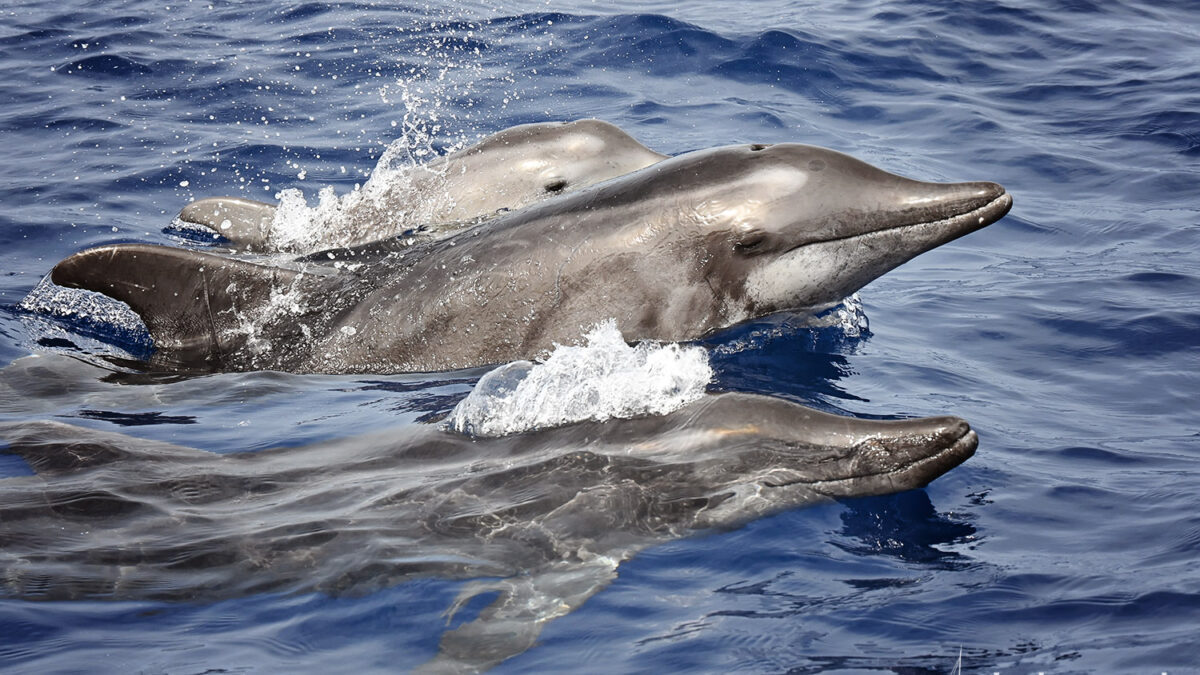
Toothed whales (Odontoceti) and Baleen whales (Mysticeti) are different in so many ways but, like all taxonomic groups, share a common ancestor. It is almost unbelievable to think that our beloved ocean giants descend from small, terrestrial hoofed mammals that returned to the ocean to live as marine inhabitants 50 million years ago. For scientists, their adaptation to an aquatic lifestyle is considered irrevocable on evolutionary terms – the point of no return. Once aquatic, there was no going back to the terrestrial lifestyle. This evolutionary threshold was discovered recently, after researchers analysed over 5,600 mammal species and found that once mammals become fully aquatic, rebuilding limbs for weight-bearing and reversing millions of years of metabolic change is virtually impossible. This irreversible change means they are highly specialised to their marine environment but also highly vulnerable, especially with today’s changing ocean.
These specialisations included the development of a streamlined, hydrodynamic body as well as the change of position of the nose from the front of their faces to the tops of their heads 12 million years ago. In 2024, a study was published highlighting the regionalised structure of cetacean backbones for locomotion in water. A 2023 study found that their enormous body sizes evolved much later than expected—roughly 20 million years after they returned to the sea—likely driven by the need to manage temperature in cold environments.
As evolution progressed, changes determining the two cetacean suborders become more evident. Toothed whales evolved asymmetrical “wonky” skulls to accommodate the melon organ that is used for echolocation and communication. Their large brains preceded the development of echolocation according to new data, rather than evolving specifically for it. The teeth of toothed whales varied among all species, from the wedged teeth of dolphins up to the tusk of the narwhal.
While toothed whales retained their teeth, Mysticeti apparently lost them, passing through a suction feeding phase before evolving the keratinous baleen plates up to 7 million years later. To this day, their embryos develop tooth buds that are then reabsorbed. The development of baleen and accompanying filter feeding mechanism, allowed them to achieve giantism. Additionally, research conducted on baleen whale genomes, revealed positive selection on genes related to immunity, metabolism and longevity which enabled them to achieve their massive body sizes and adapt to specialised diets. While the skulls of toothed whales evolved to use echolocation, baleen whales evolved to perceive low frequency skulls with their bilaterally symmetrical skulls.
These differences along with many others further impacted the lives of the specimens that resulted from these evolutionary processes, impacting their social lives, distribution and life cycles. Today, the variety of cetaceans we can experience in our oceans is a testament to an evolutionary tale that is still being written in today’s changing ocean.
By Paula Thake