BWB – Hunting Techniques of Humpback Whales
February 10, 2026
BWB – The highest mountain in Madeira
February 14, 2026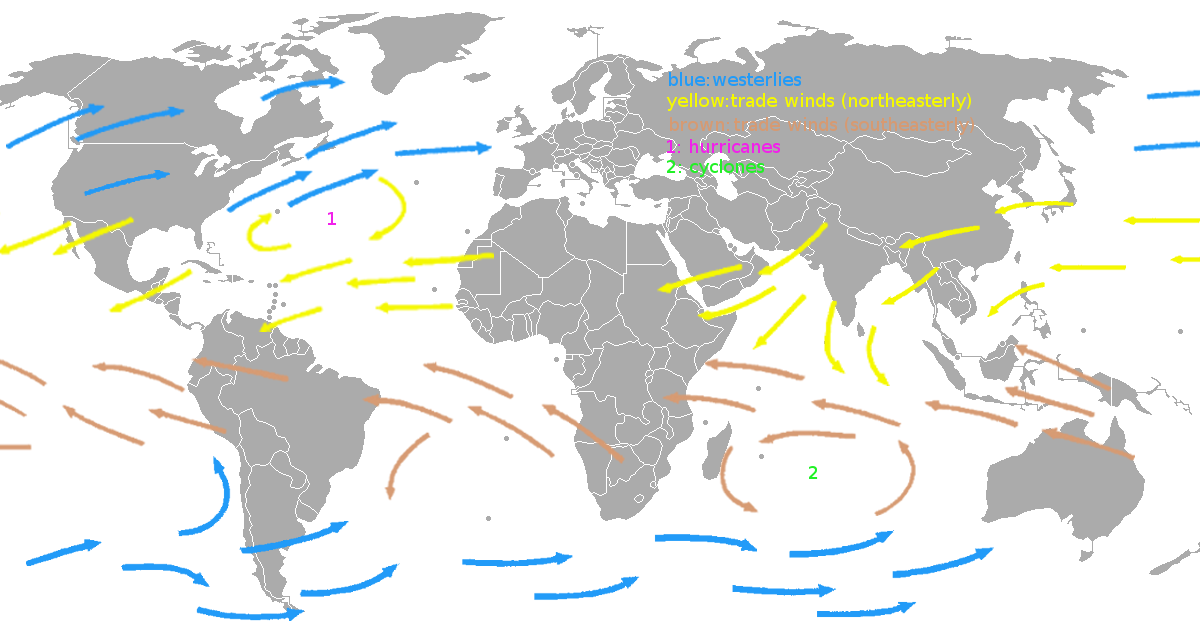
The northeasterly trade winds play a decisive role in shaping Madeira’s climate and vegetation. These steady air currents are created by global wind and temperature patterns and reach the island throughout the year. Because Madeira lies in the middle of the Atlantic and is crossed by high mountain ranges, the trade winds have a particularly strong effect here.
When the moist air masses brought by the trade winds reach the island’s north coast, they are forced upward by the steep mountain slopes. As the air rises, it cools, forming clouds and precipitation. As a result, the northern part of the island is noticeably wetter, greener, and cooler than the south. The high humidity also supports the growth of the Laurissilva forest, a unique ancient mountain forest found only in a few places in the world.
The south coast lies in the rain shadow of the mountains. Here, the trade winds arrive in a weakened form, creating a drier and sunnier climate. These conditions are ideal for agriculture, tourism, and settlements. On some days, the temperature difference between the north and south sides can be several degrees.
At mid-altitudes, the influence of the trade winds often leads to the formation of a stable cloud layer, known as the trade-wind cloud. It provides consistent moisture and plays an important role in Madeira’s water supply. The Levadas, the island’s traditional irrigation system, channel this water into the drier regions.
Overall, the trade winds shape Madeira’s characteristic climate, with mild temperatures, lush vegetation in the north, and sunny conditions in the south. They are one of the key factors behind the island’s exceptional climatic diversity.
© Photo by Wikipedia
By Fatima Kutzschbach