BWB – Madeira’s Position in the Atlantic
February 2, 2026
31.01.2026 – Window of opportunity
February 6, 2026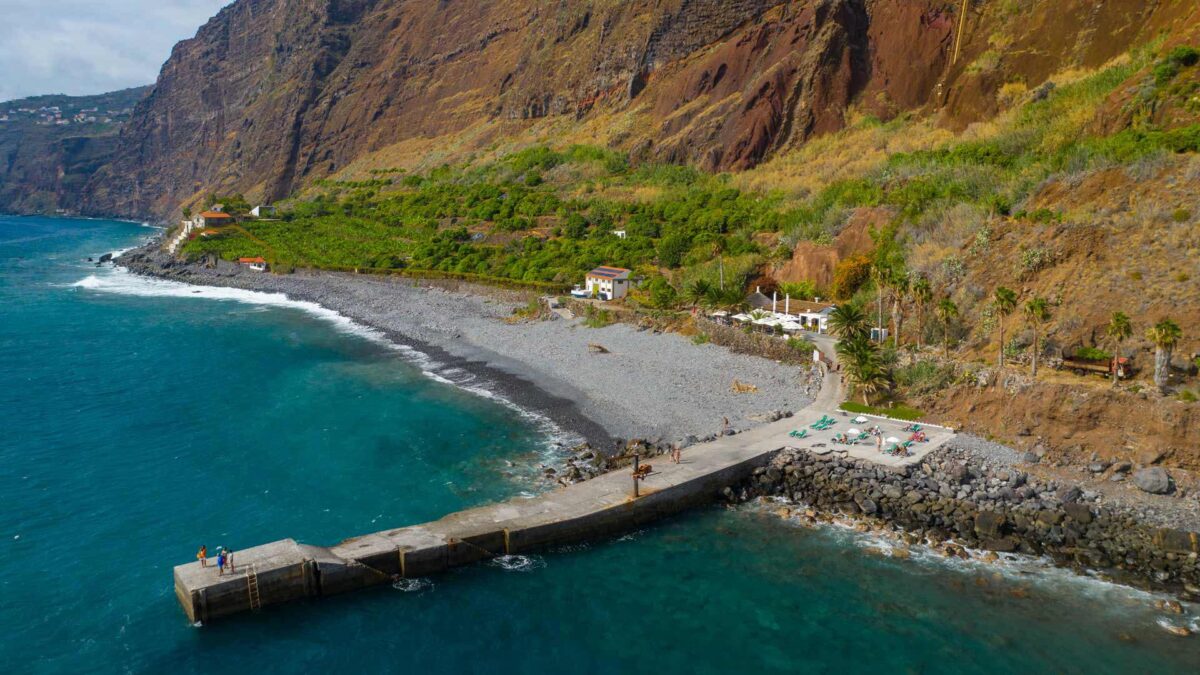
The Fajãs on Madeira are fascinating geological formations, found mainly along the island’s steep coasts. The term “Fajã” originally comes from Portuguese and refers to flat land areas located at the base of cliffs or on steep slopes. They are particularly striking along the north and west coasts of Madeira, where the mountains drop sharply into the sea.
Fajãs are formed through natural deposits and geological processes. They often result from landslides, rockfalls, or lava flows that accumulate over long periods along the shoreline. The materials are smoothed by erosion and ocean movements, creating relatively flat, fertile areas amid the steep landscape.
Fajãs are significant for the island in many ways. They provide arable land that would otherwise be unusable on steep slopes, allowing the cultivation of fruits, vegetables, and other crops. Some Fajãs are also inhabited, although access is often only possible via narrow paths or steep trails.
Beyond their agricultural use, Fajãs also have ecological and scenic importance. They create unique microclimates where special plants and animals can thrive. Additionally, they contribute to Madeira’s landscape diversity, highlighting the dramatic interaction between mountains, cliffs, and the sea.
Today, Fajãs are an interesting destination for both locals and visitors. They demonstrate how natural forces have shaped the island over millennia and illustrate the close relationship between humans and the landscape.
© Photo by Visit Madeira
By Fatima Kutzschbach