19.10.2026 – Out of sight, out of mind
October 25, 2026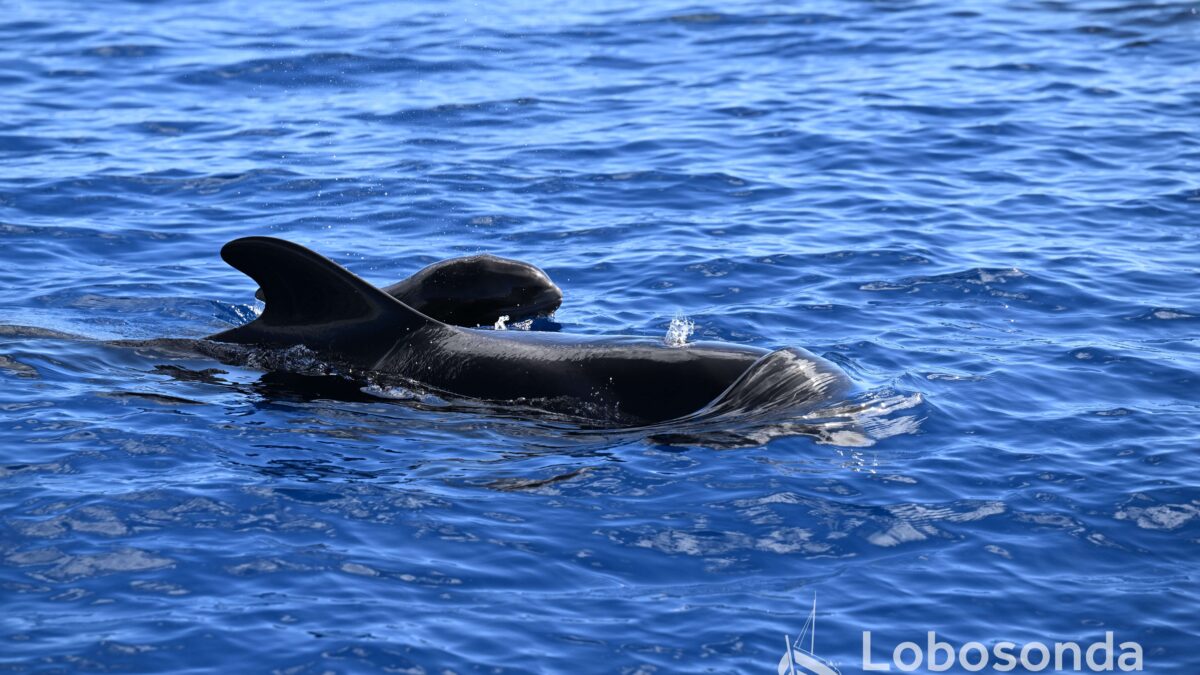
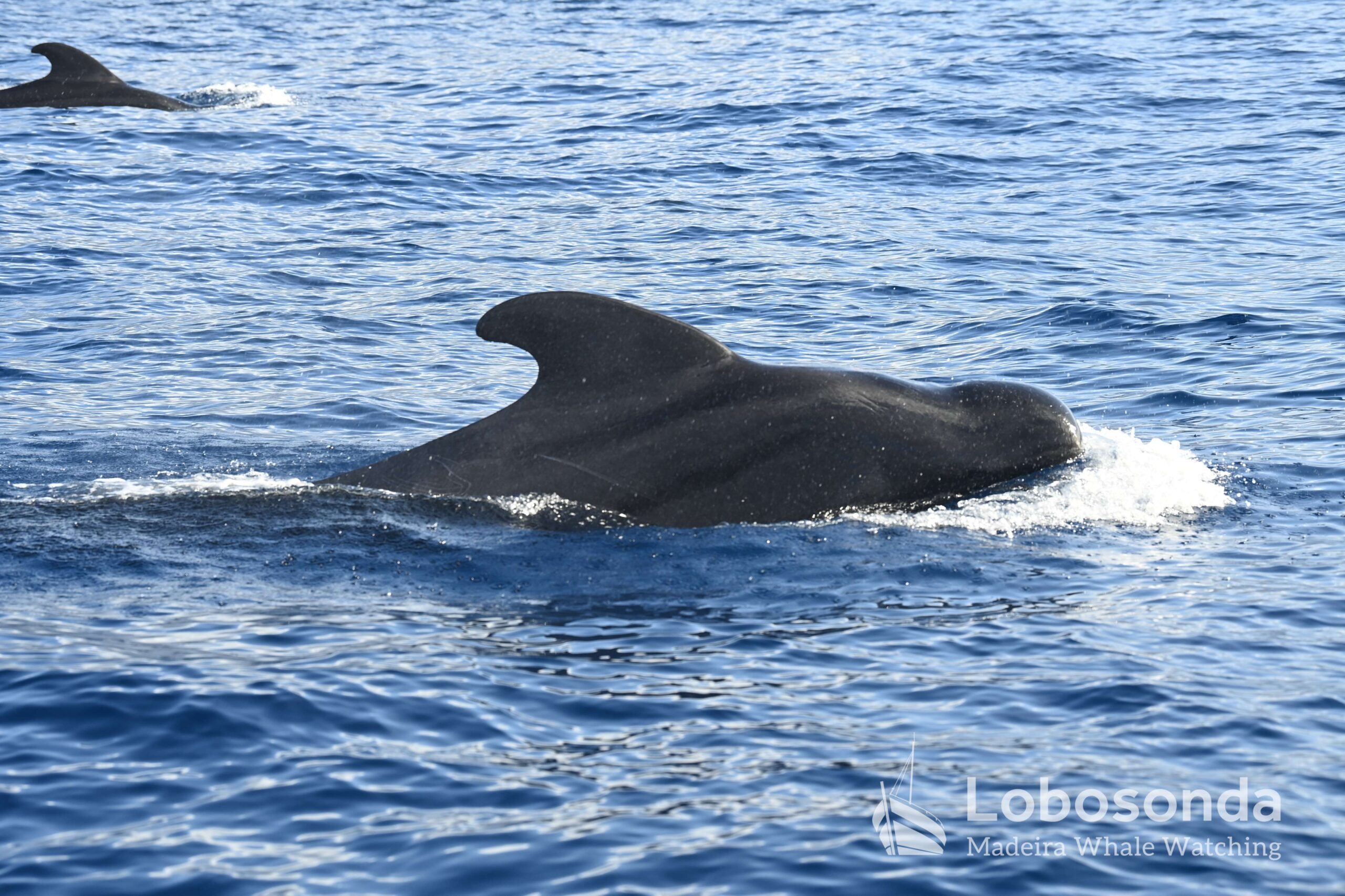
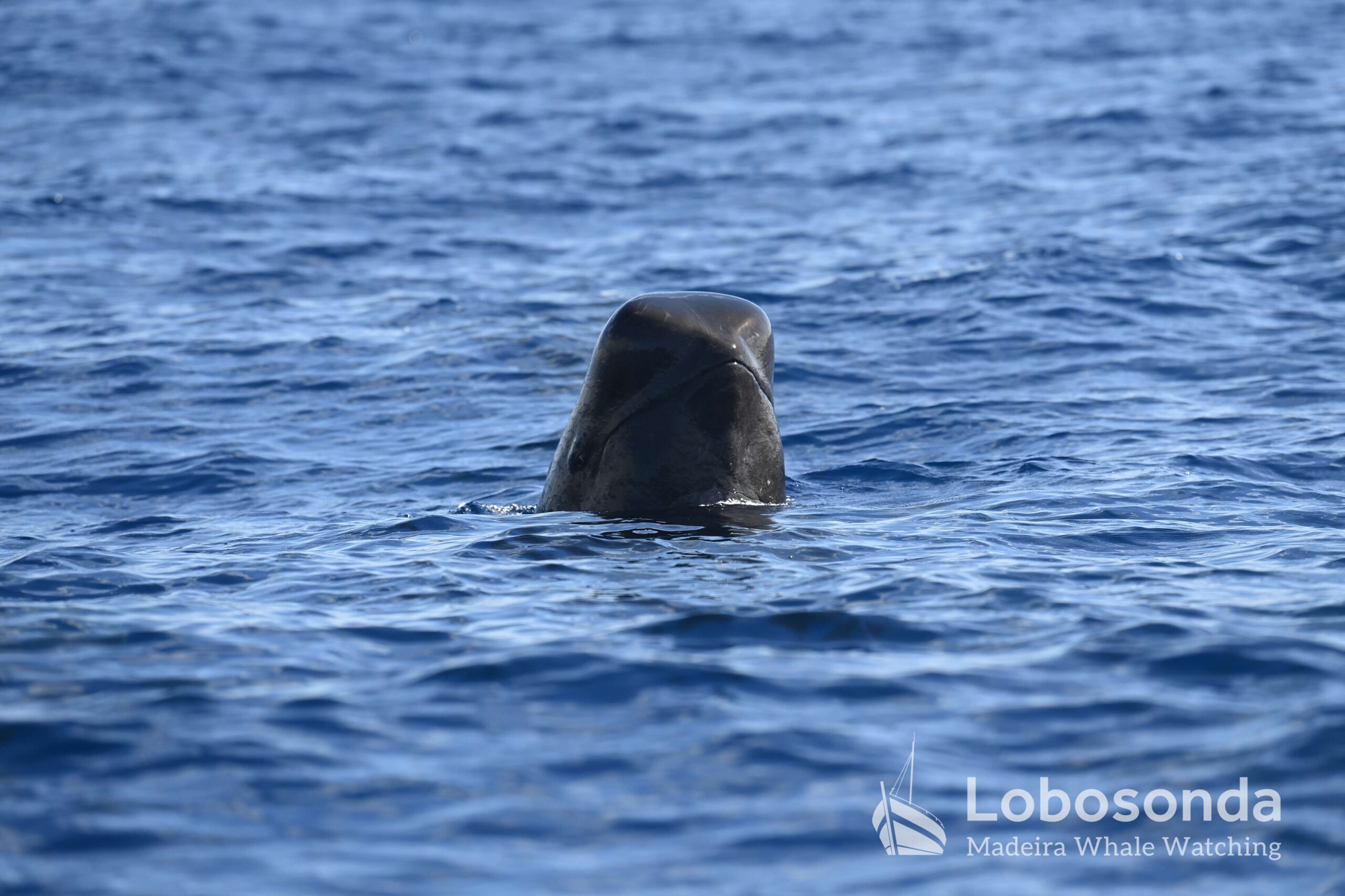
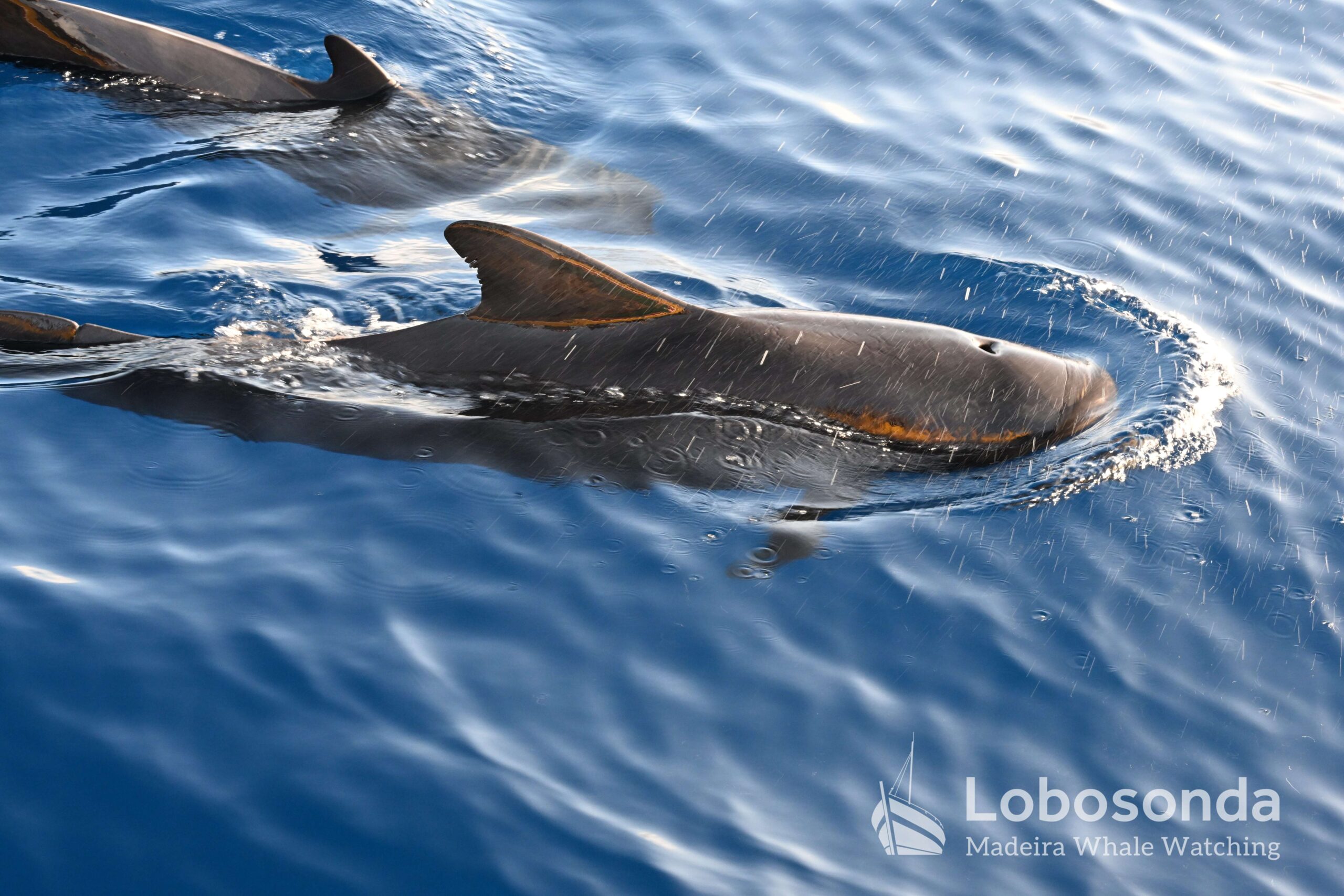
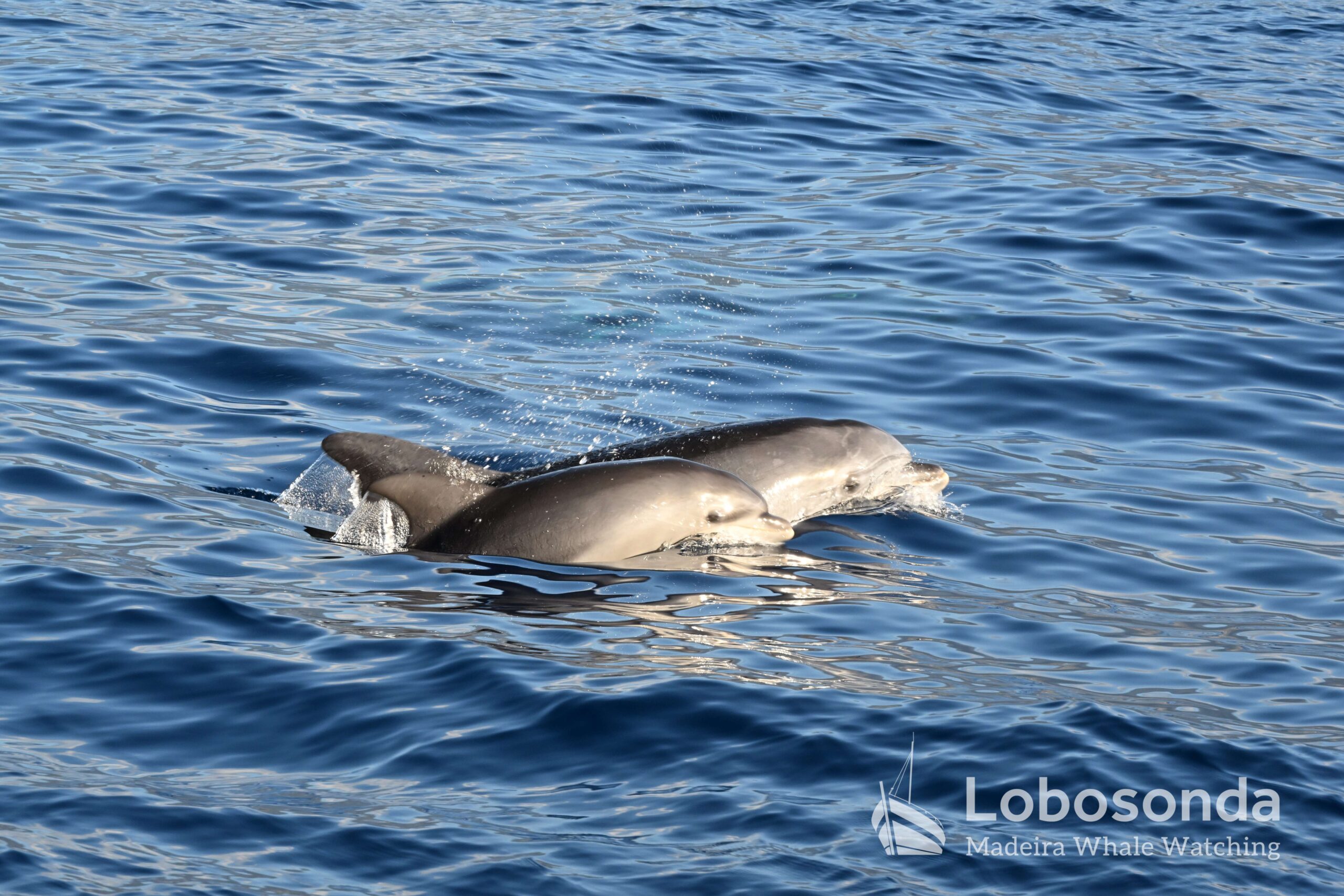
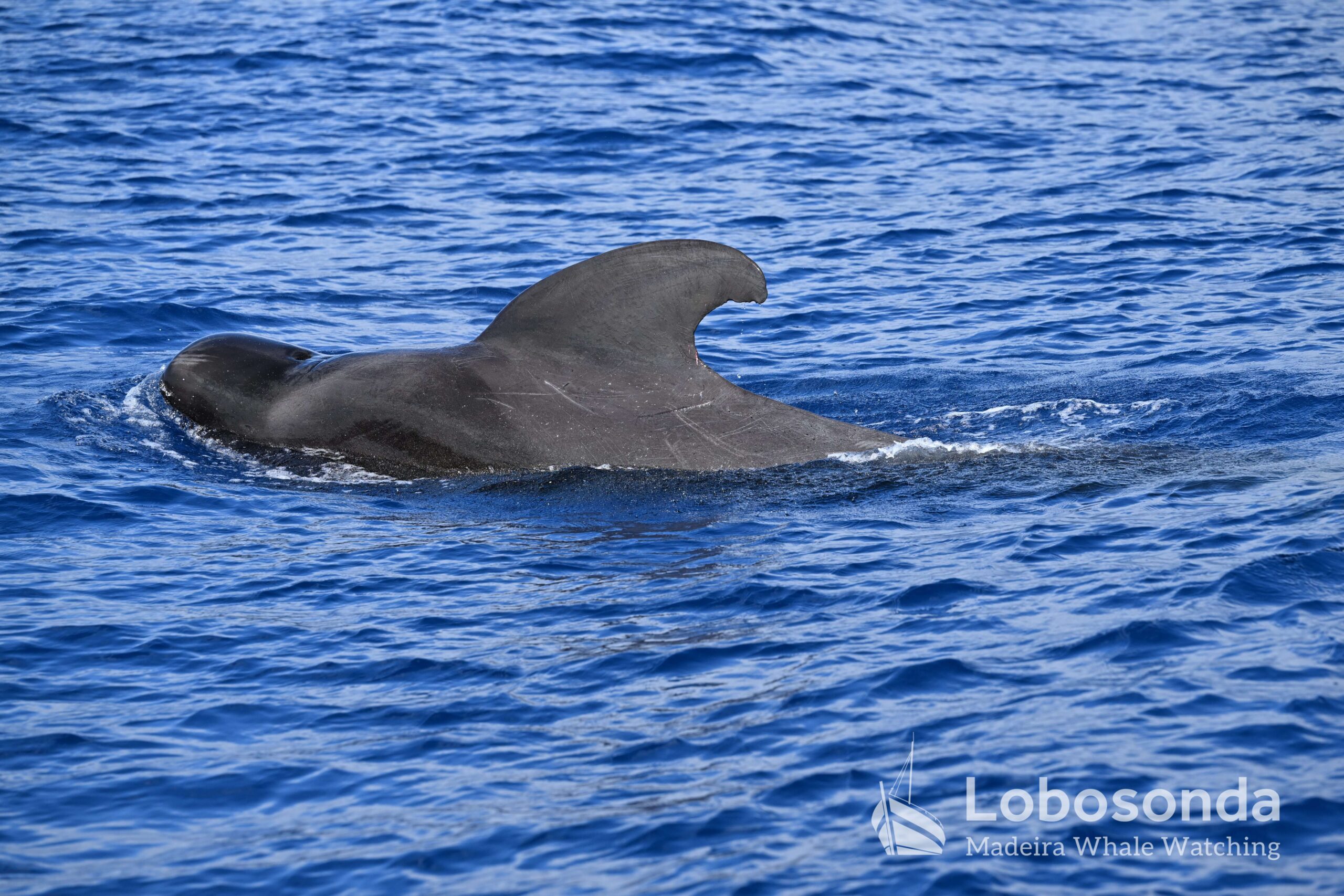
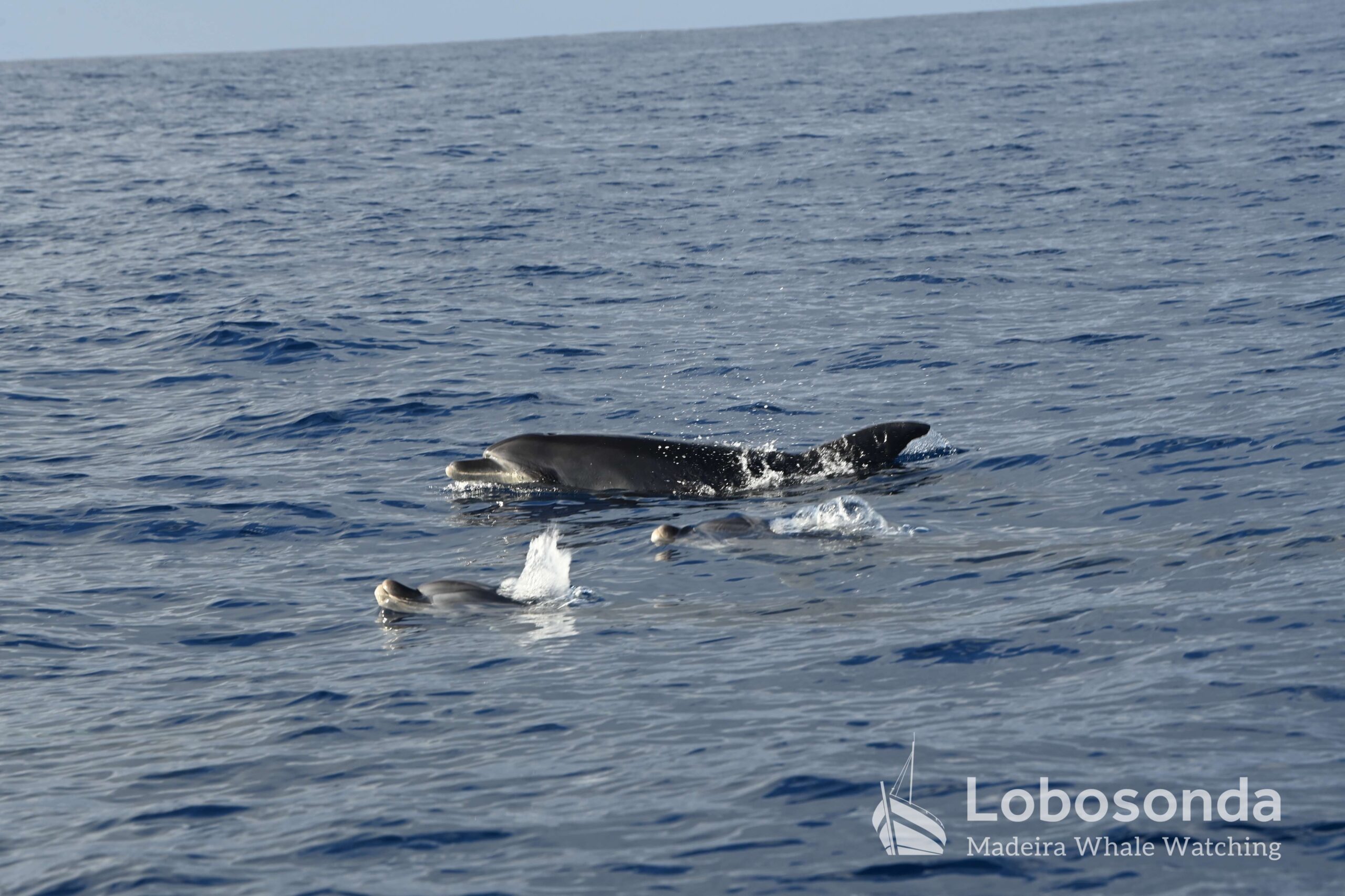
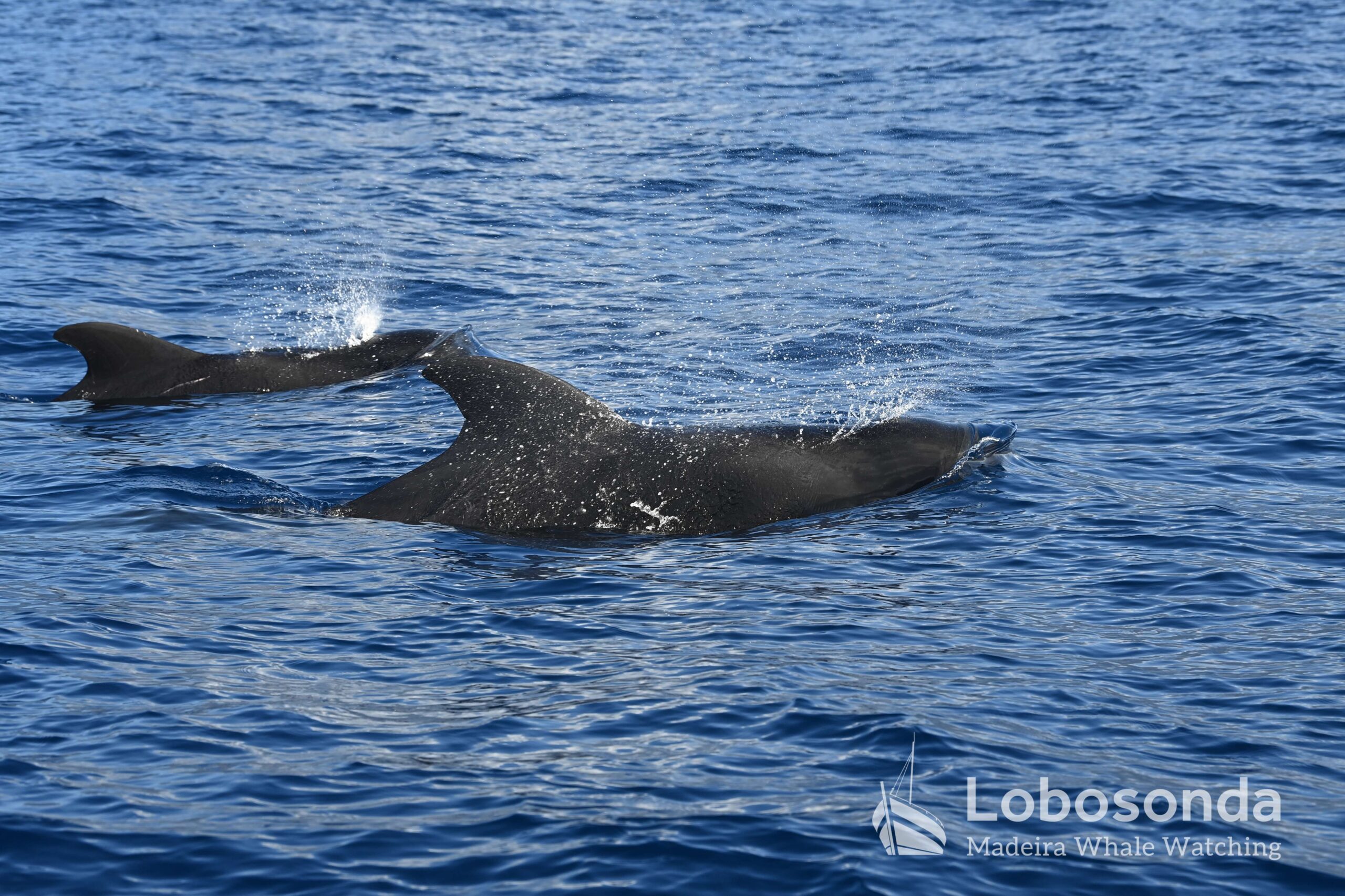
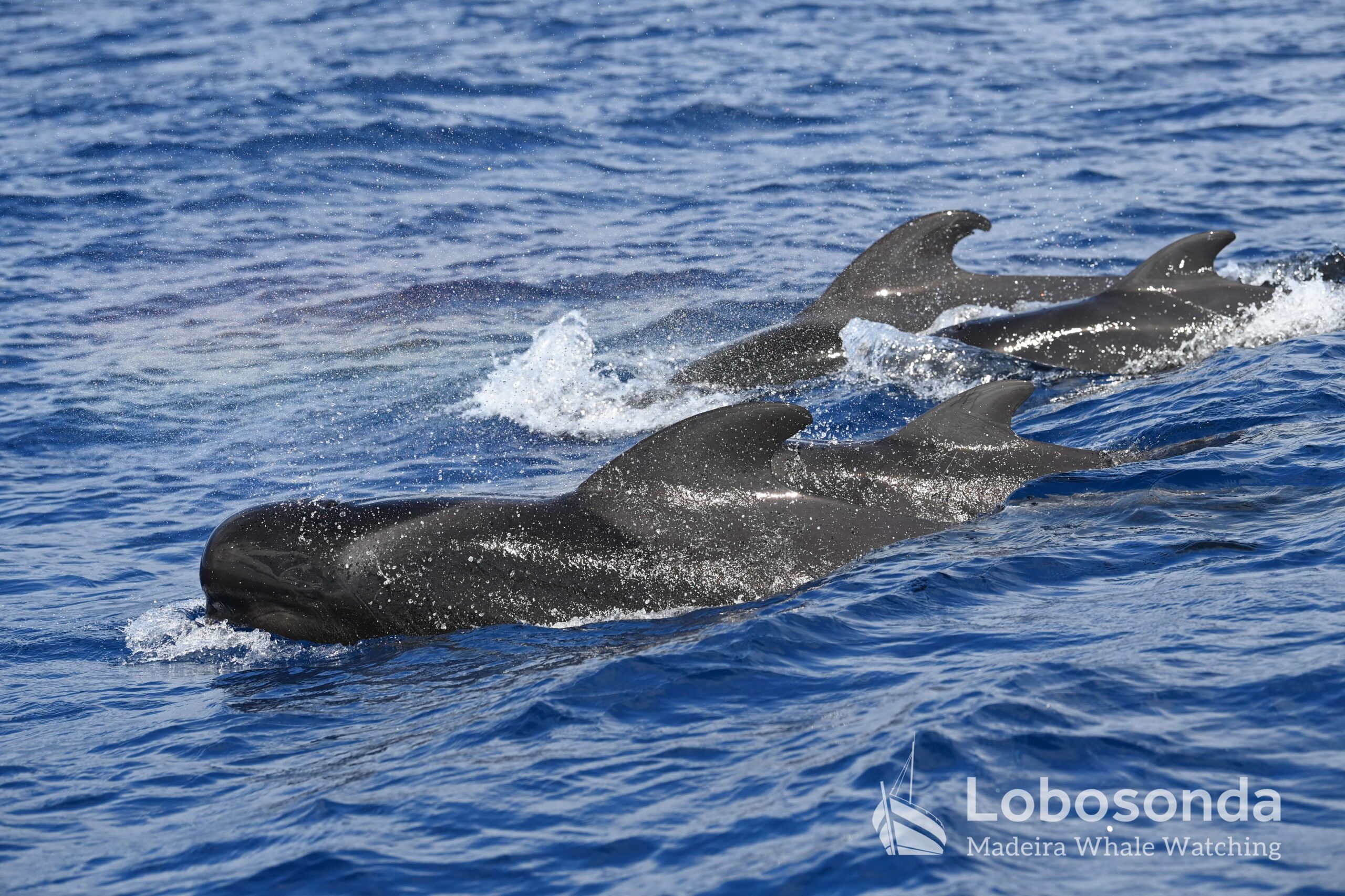
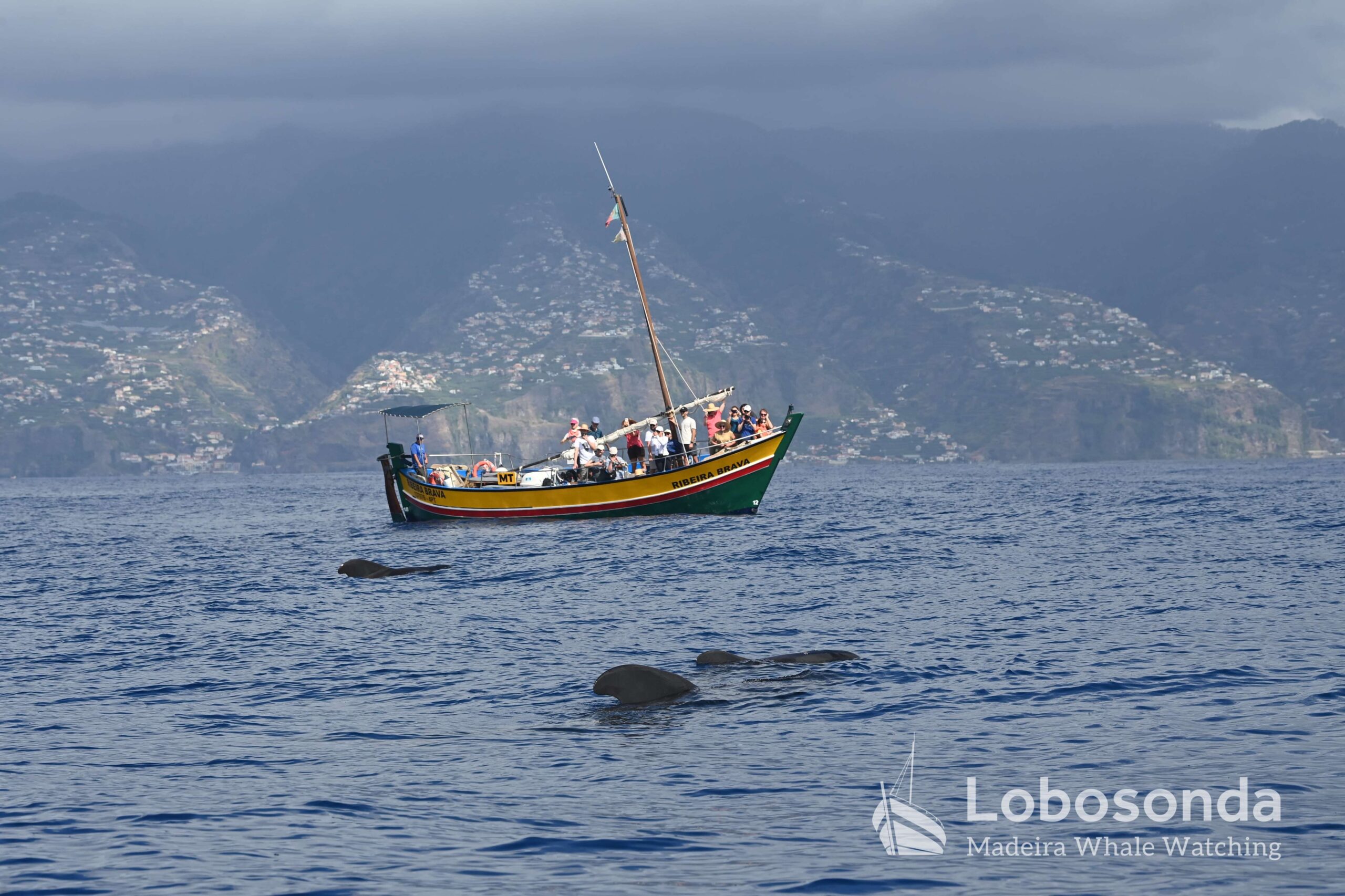
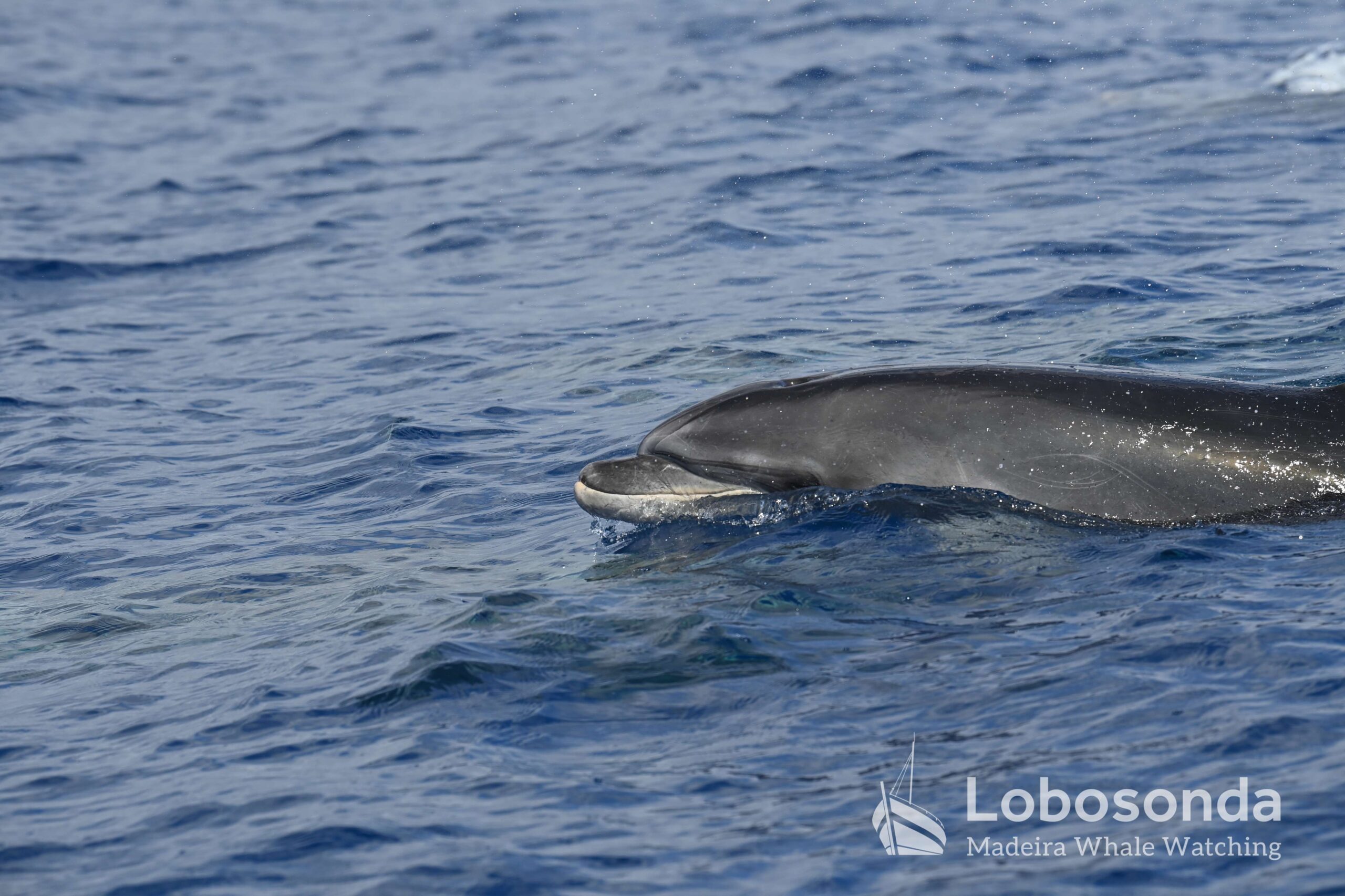
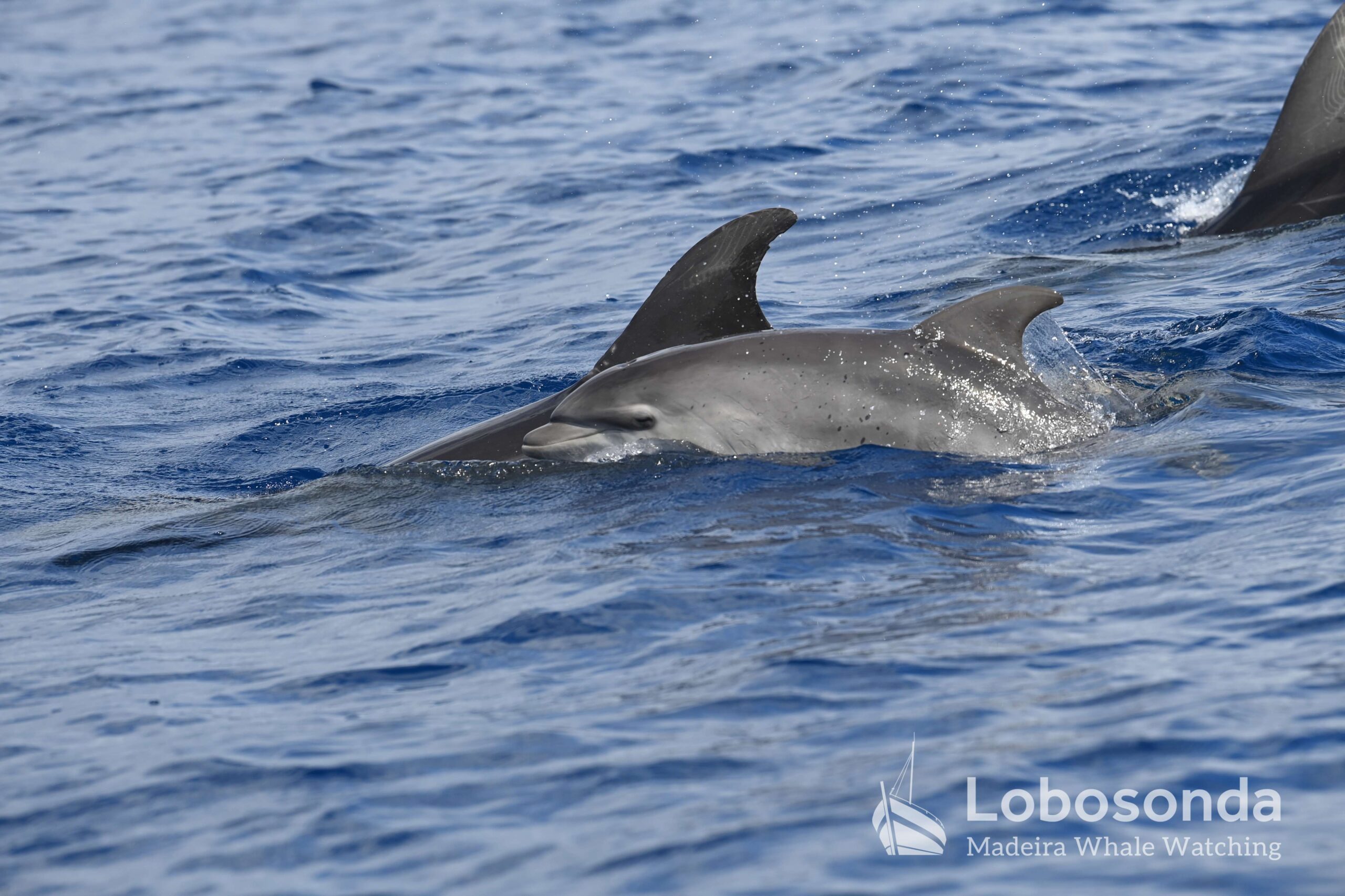
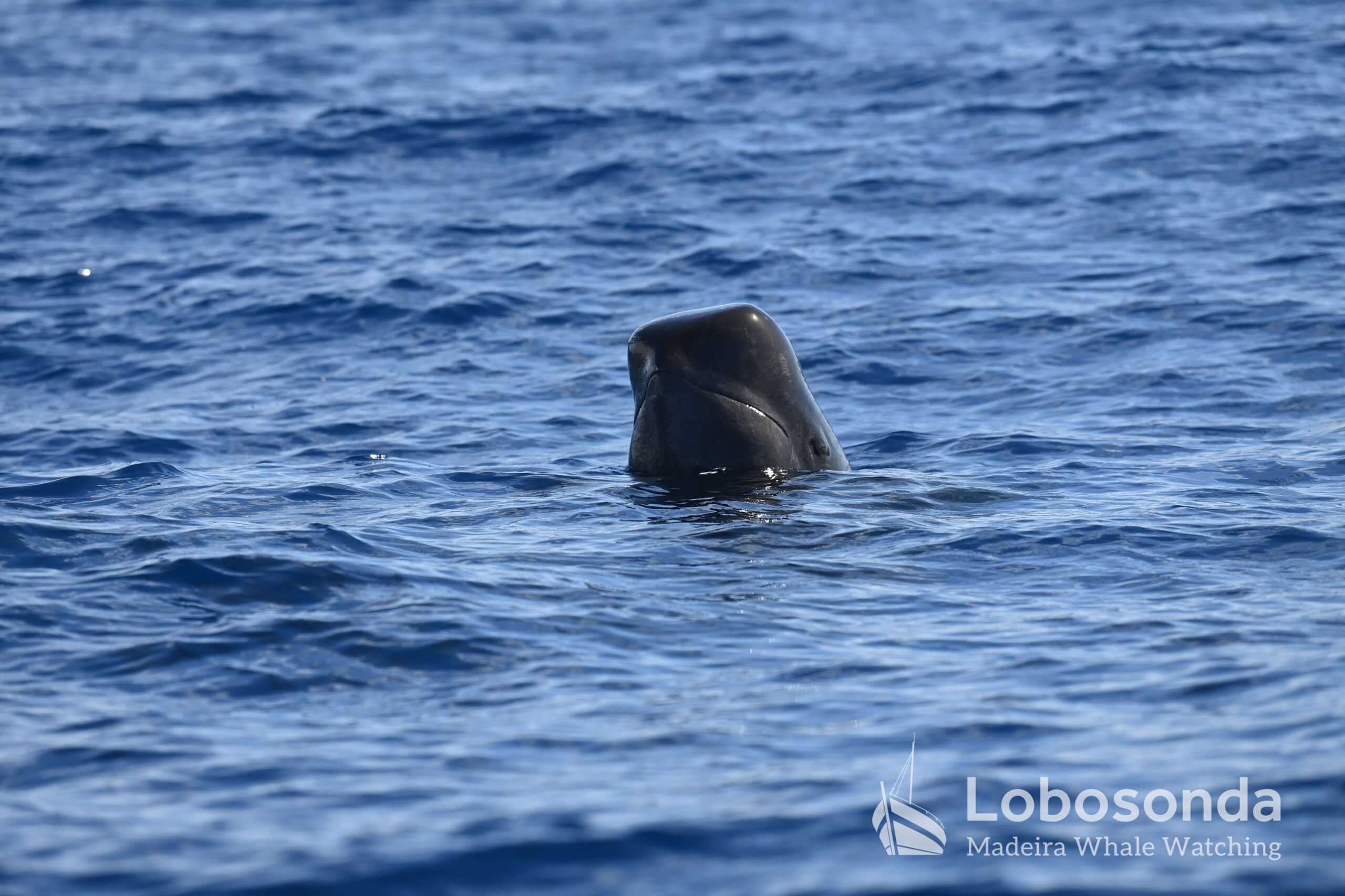
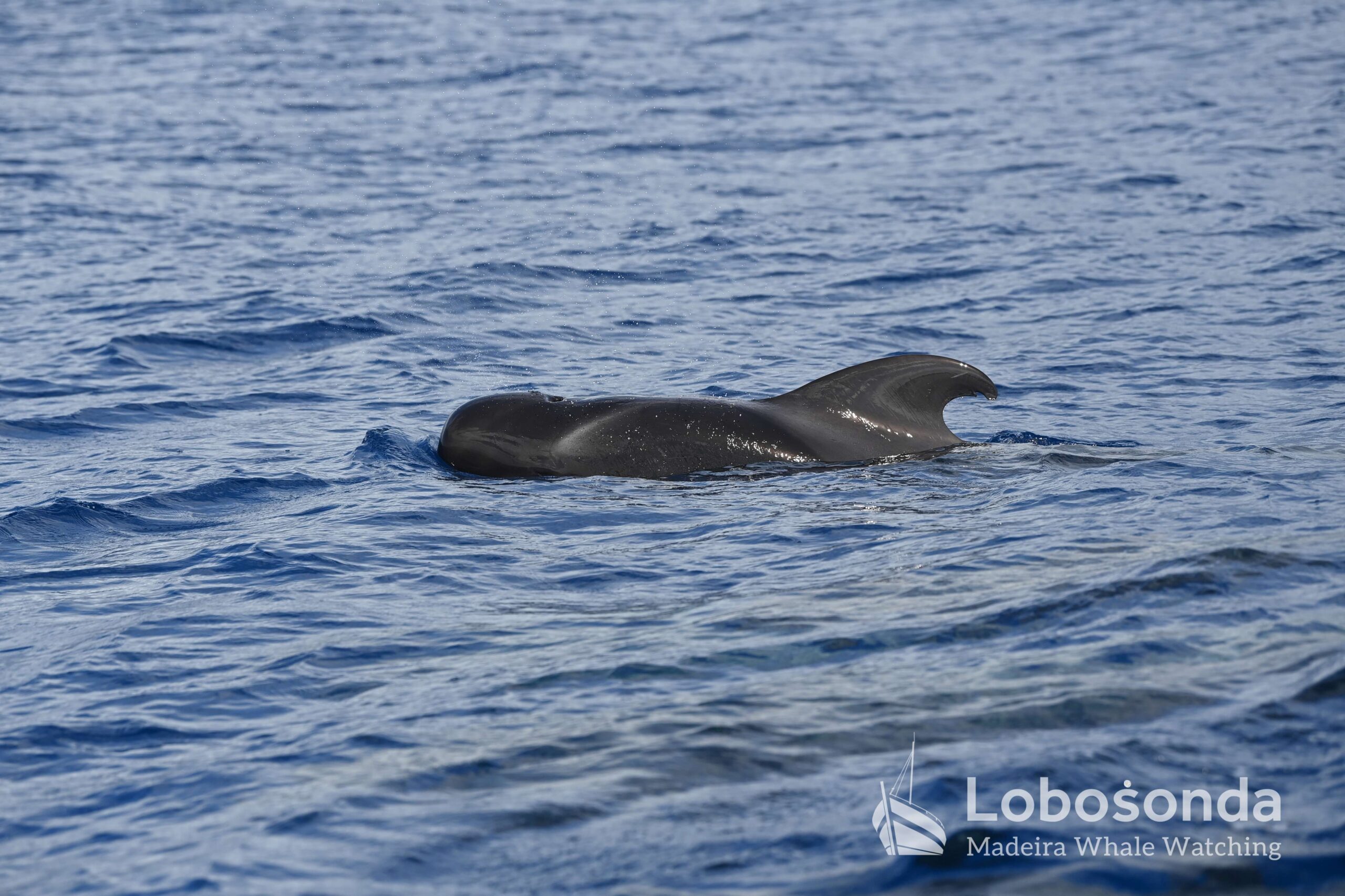
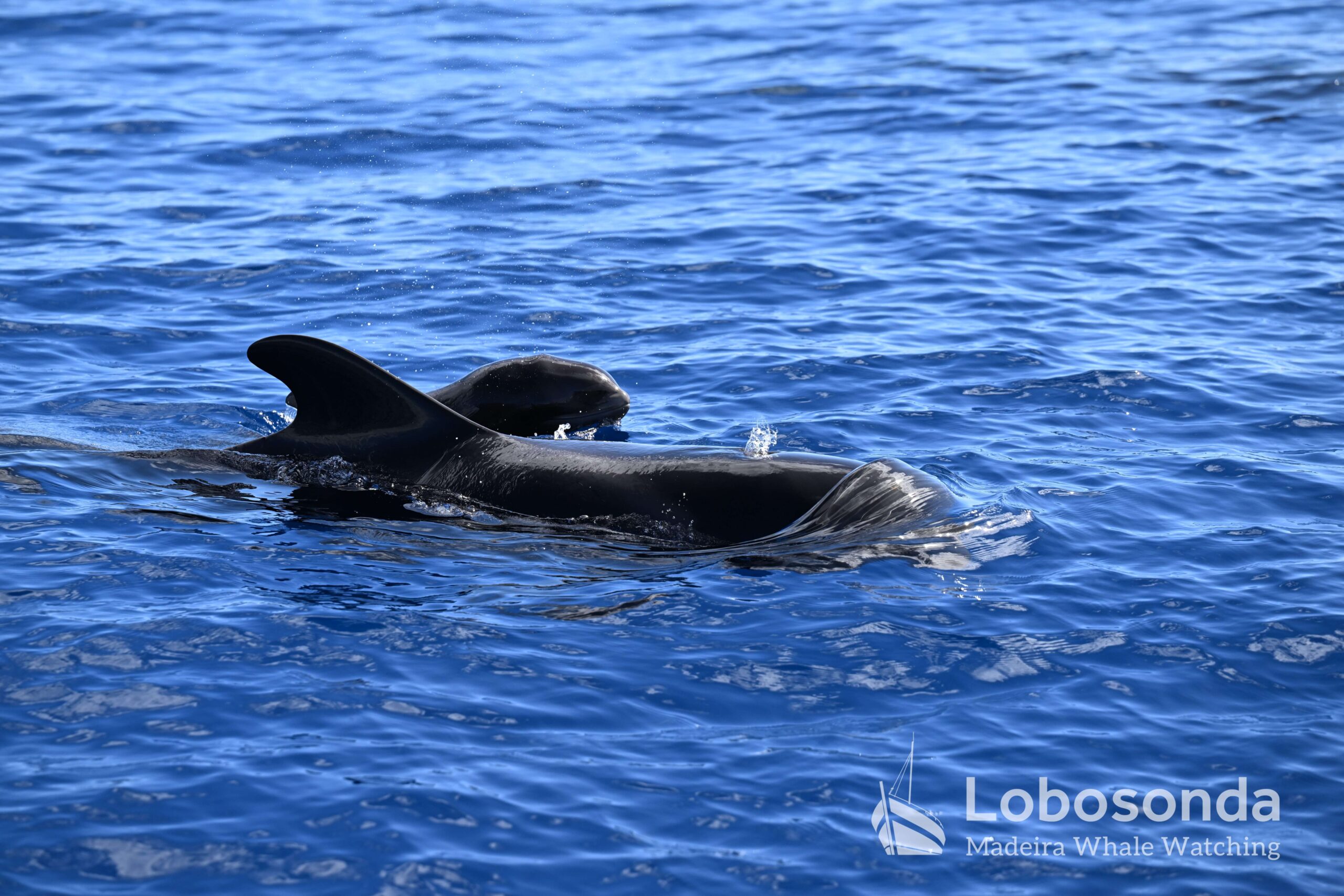
Both species were seen with newborn and calves today. A group of short-finned pilot whales (Globicephala macrorhynchus) introduced us to their new addition : a newborn, swimming closely to its mom. It wasn’t easy to photograph the little one as they only measure 1.5m and surface very quickly. Like the calf present in the bottlenose dolphin (Tursiops truncatus) group, they display light-colored vertical stripes on their body known as foetal folds. Alloparental care are observed in pods of pilot whales: other females in the pod—including post-reproductive or older grandmothers—help guard, care for, and nurse the calves. The calves are fragile and even with the protection from the group, they face threats like noise pollution, boat traffic and encounter with other species (like orcas). It is then very important to keep in mind the speed of a boat and the Approach around a group with young ones, and the observation time to minimize our presence.
Both species that were seen today can interact with each other and communicate, though it won’t be a specific dialect. They will use whistles, physical gesture and body postures. They will engage in synchronized swimming with bottlenose dolphins mimicking the behaviour of the pilot whales.
By Juliette Colançon
Sightings of the day
Ribeira Brava
09:00 Bottlenose dolphin, Short-finned pilot whale
13:00 Bottlenose dolphin, Short-finned pilot whale
Steno
09:30 Bottlenose dolphin, Short-finned pilot whale
13:30 Bottlenose dolphin, Short-finned pilot whale