# Construir o Futuro
January 22, 2026
BWB – The flower festival
January 24, 2026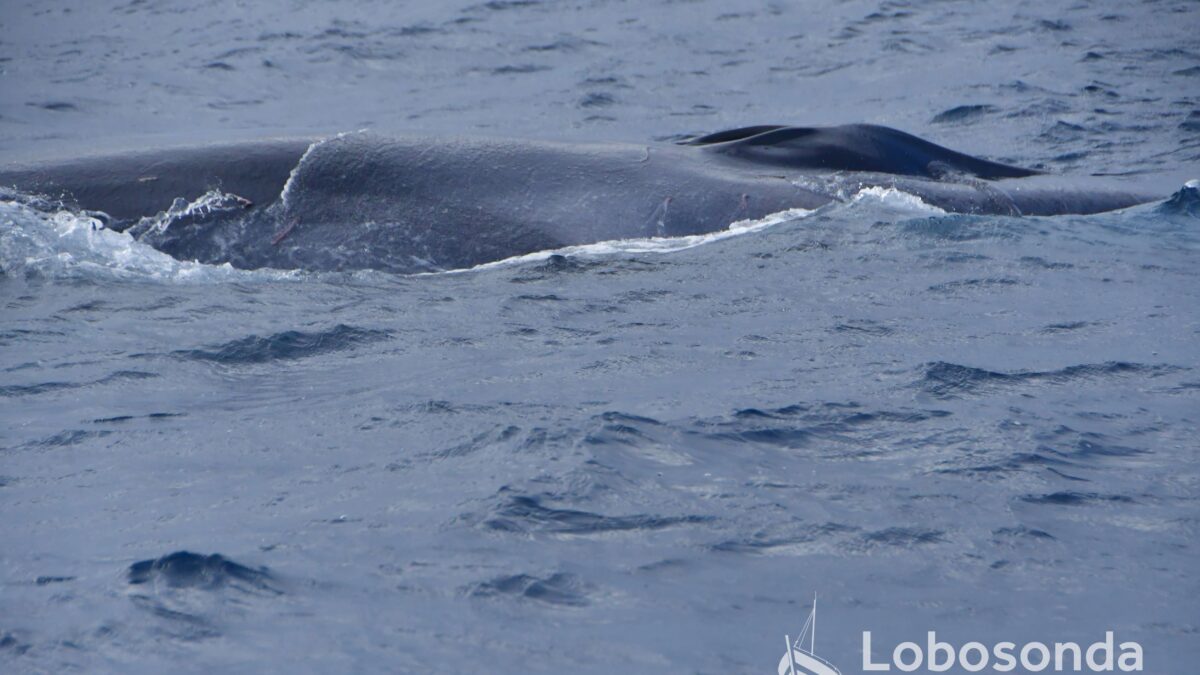
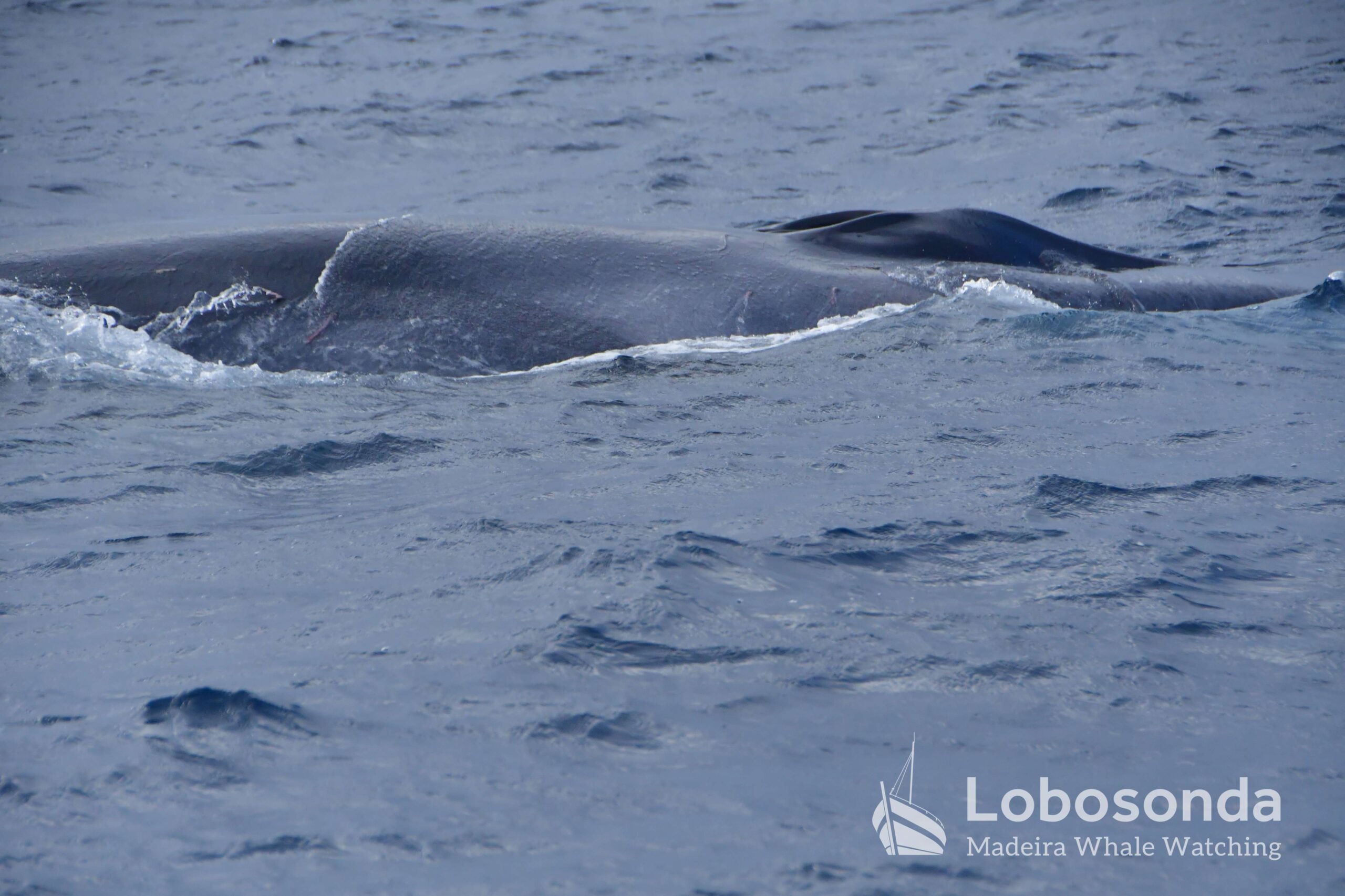
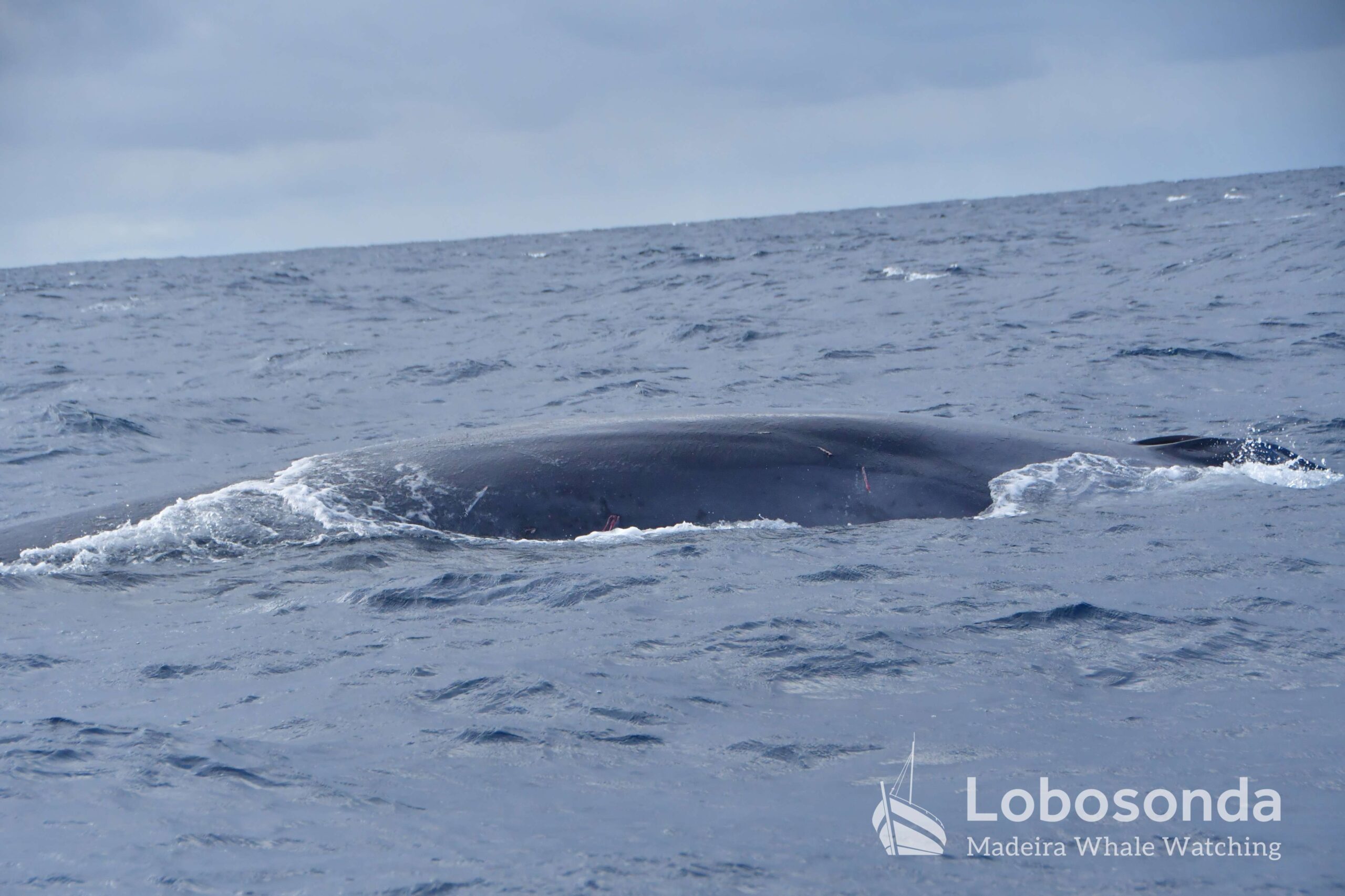
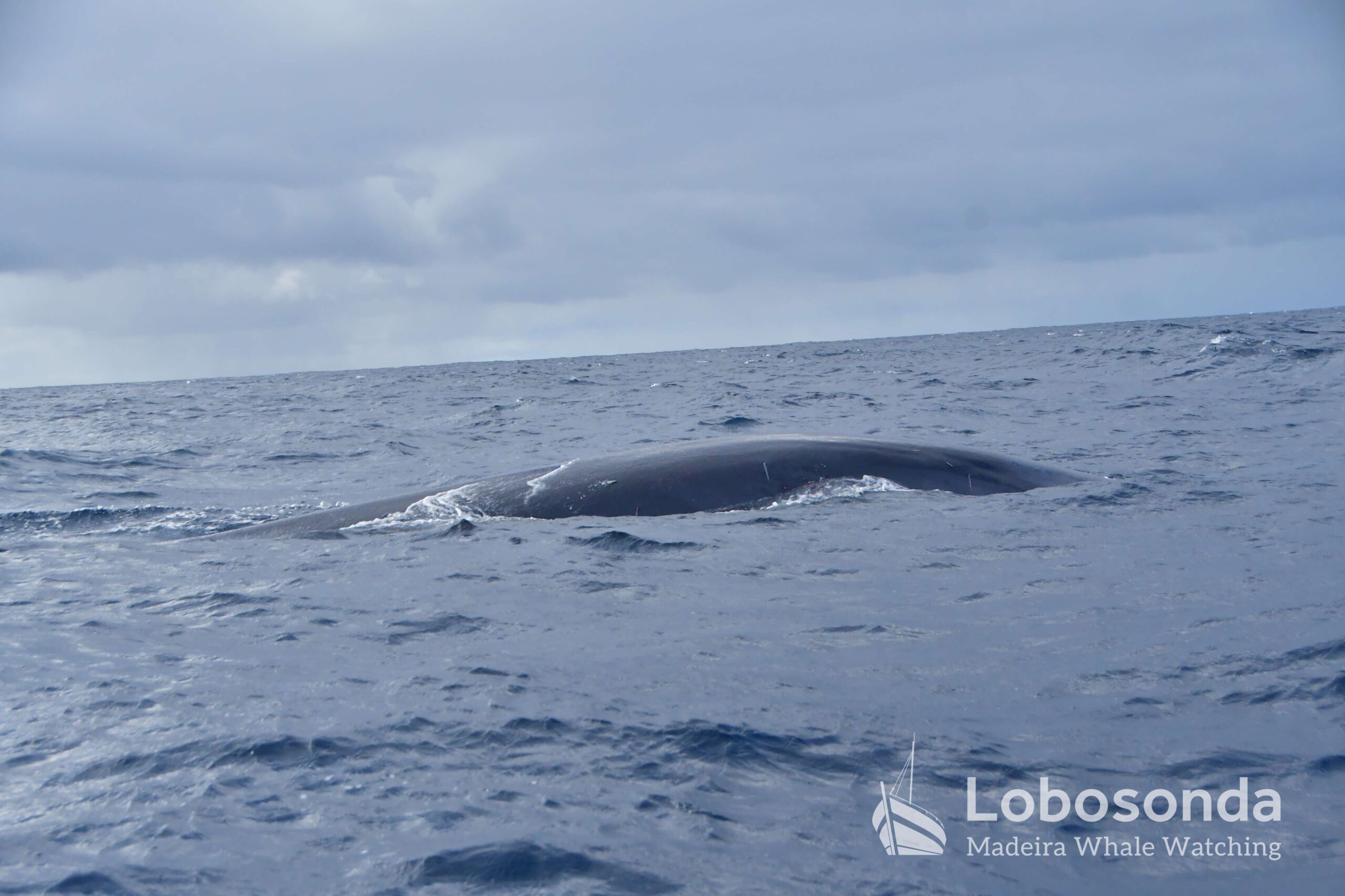
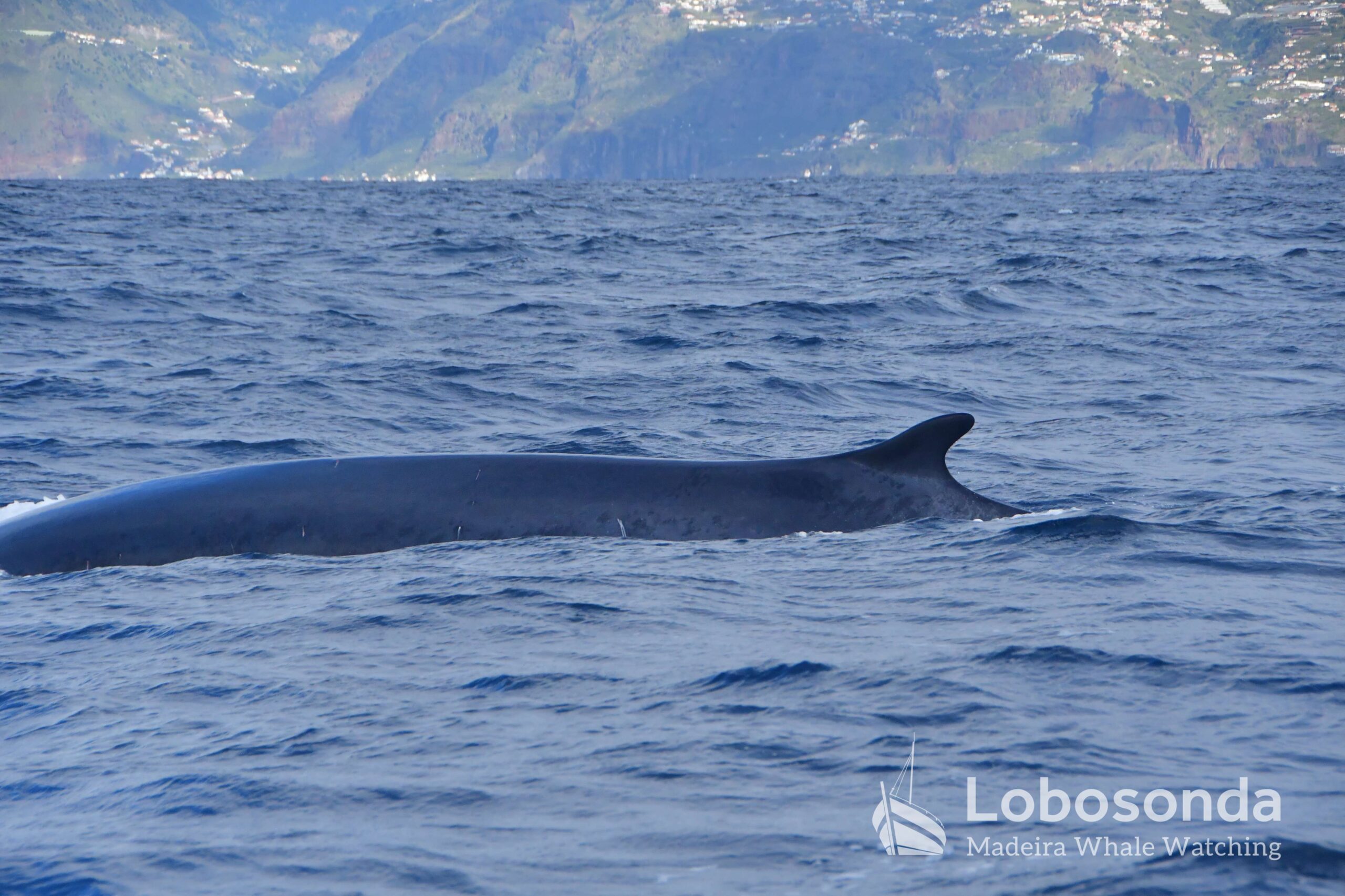
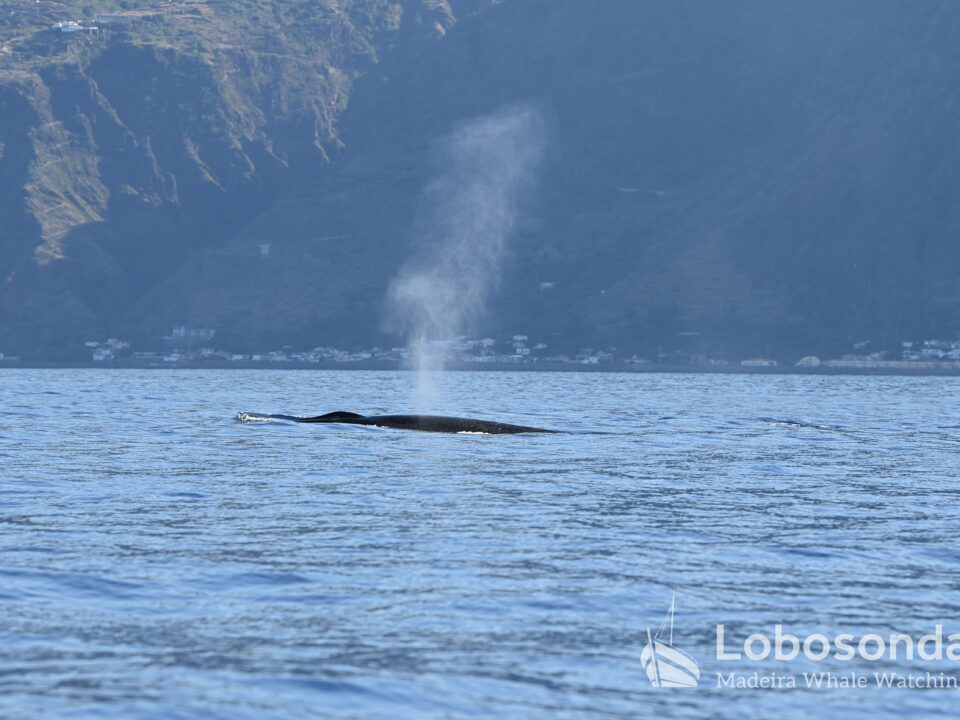
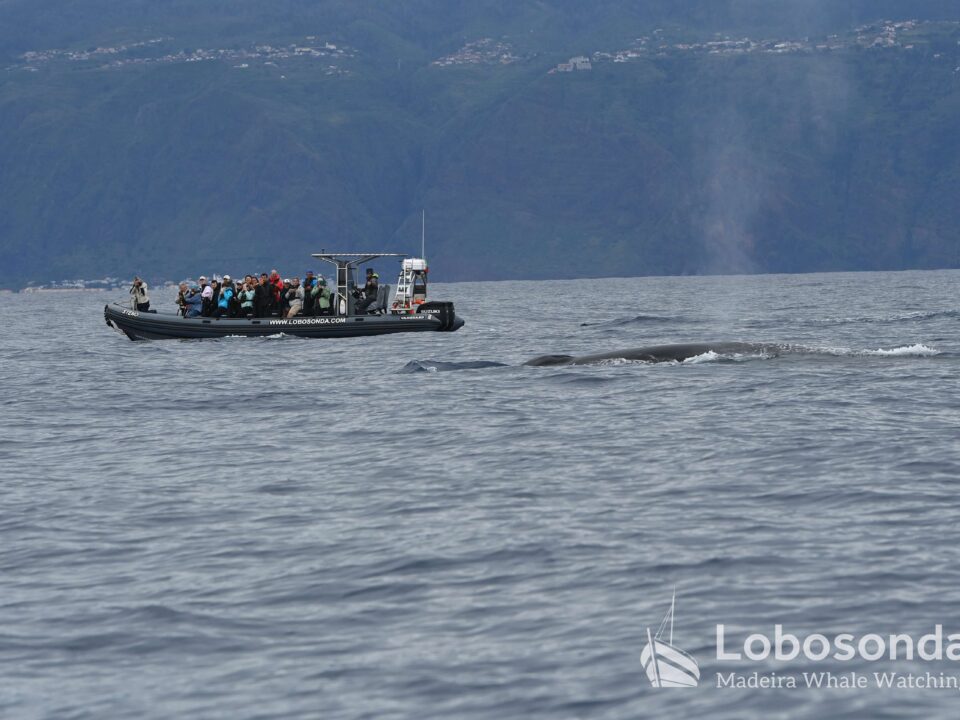
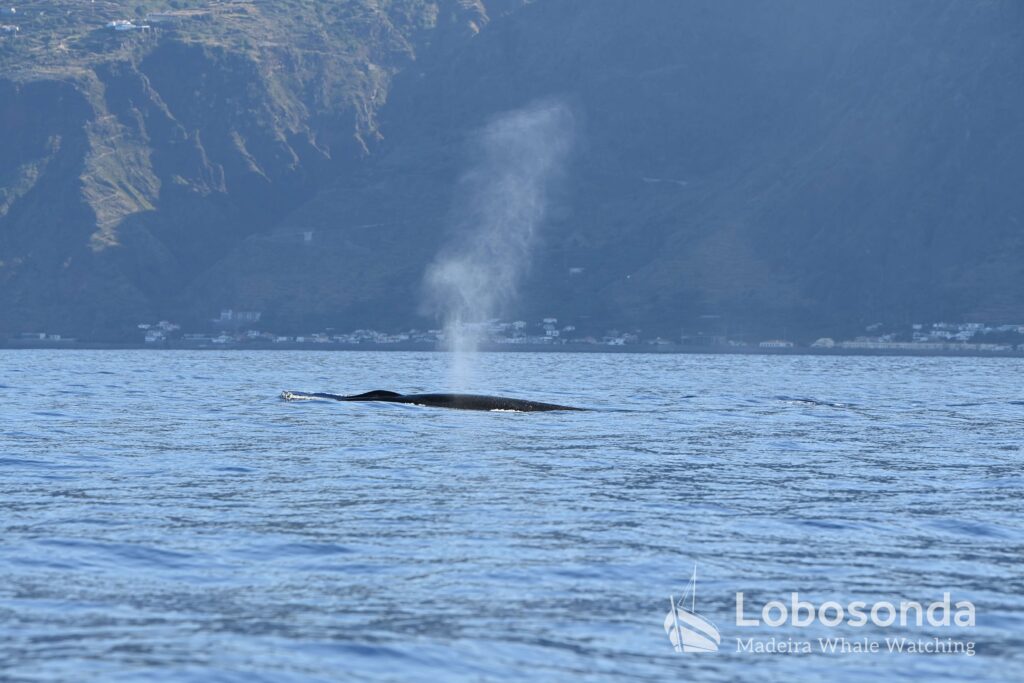
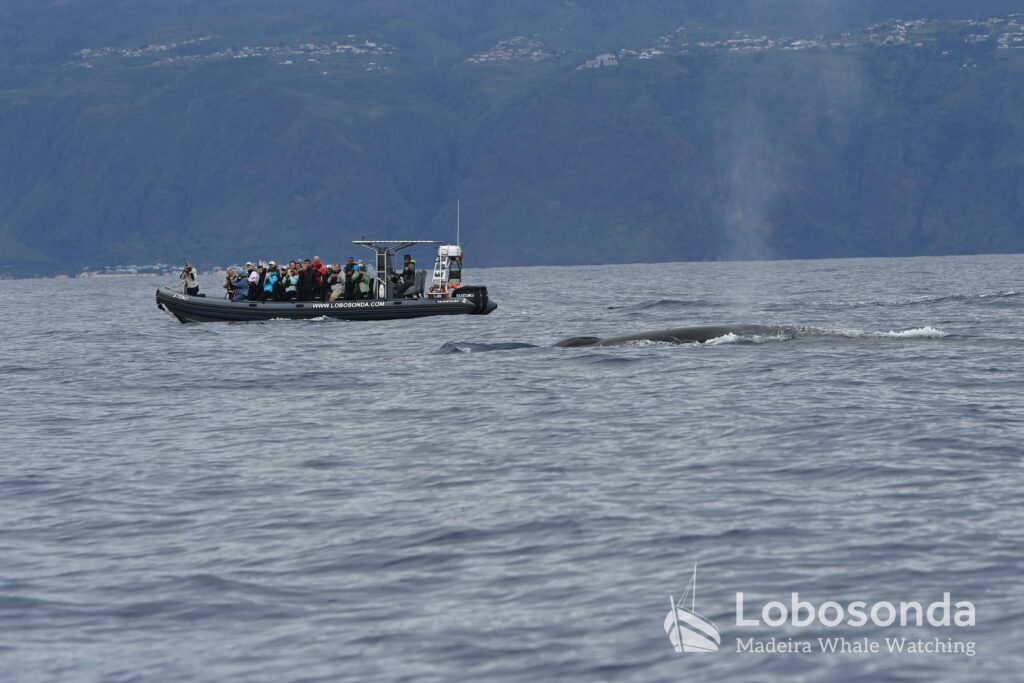
Today, it was not easy to find marine mammals among the waves and white foam caps on the sea. However, our spotter, Drumond, still managed to find a fin whale (Balaenoptera physalus). It appeared twice near the boat and impressed our guests. In such moments of sudden appearance, one unconsciously holds one’s breath in amazement at the size and uniqueness of the experience.
The fin whale is the second largest animal on earth after the blue whale and a silent giant of the oceans. Despite their size, they move with astonishing elegance and ease. With its slender, streamlined body, it glides powerfully through the open seas. It can reach a length of up to 25 meters and weigh over 70 tons. A typical feature is the asymmetrical coloring of its lower jaw, which makes it unmistakable.
Fin whales are fast swimmers and can reach speeds of up to 40 km/h. They live in all major oceans, but prefer cool to temperate waters. Their long migrations take them back and forth between feeding and breeding grounds. Fin whales feed mainly on krill, small fish, and squid. They use their baleen to filter their food from huge amounts of water.
Their blow rises high and straight into the air and is visible from far away. Their deep, far-reaching sounds are among the loudest in the ocean. This communication reaches over great distances.
For a long time, fin whales were intensively hunted and severely decimated. Unfortunately, they are still hunted in some parts of the world today. Collisions with ships and environmental pollution also pose major risks. The fin whale plays an important role in the ecological balance of the oceans. A gentle giant, it combines strength, speed, and grace. Its existence reminds us of the vastness, depth, and fragility of the oceans.
By Fatima Kutzschbach
Sighting of the day
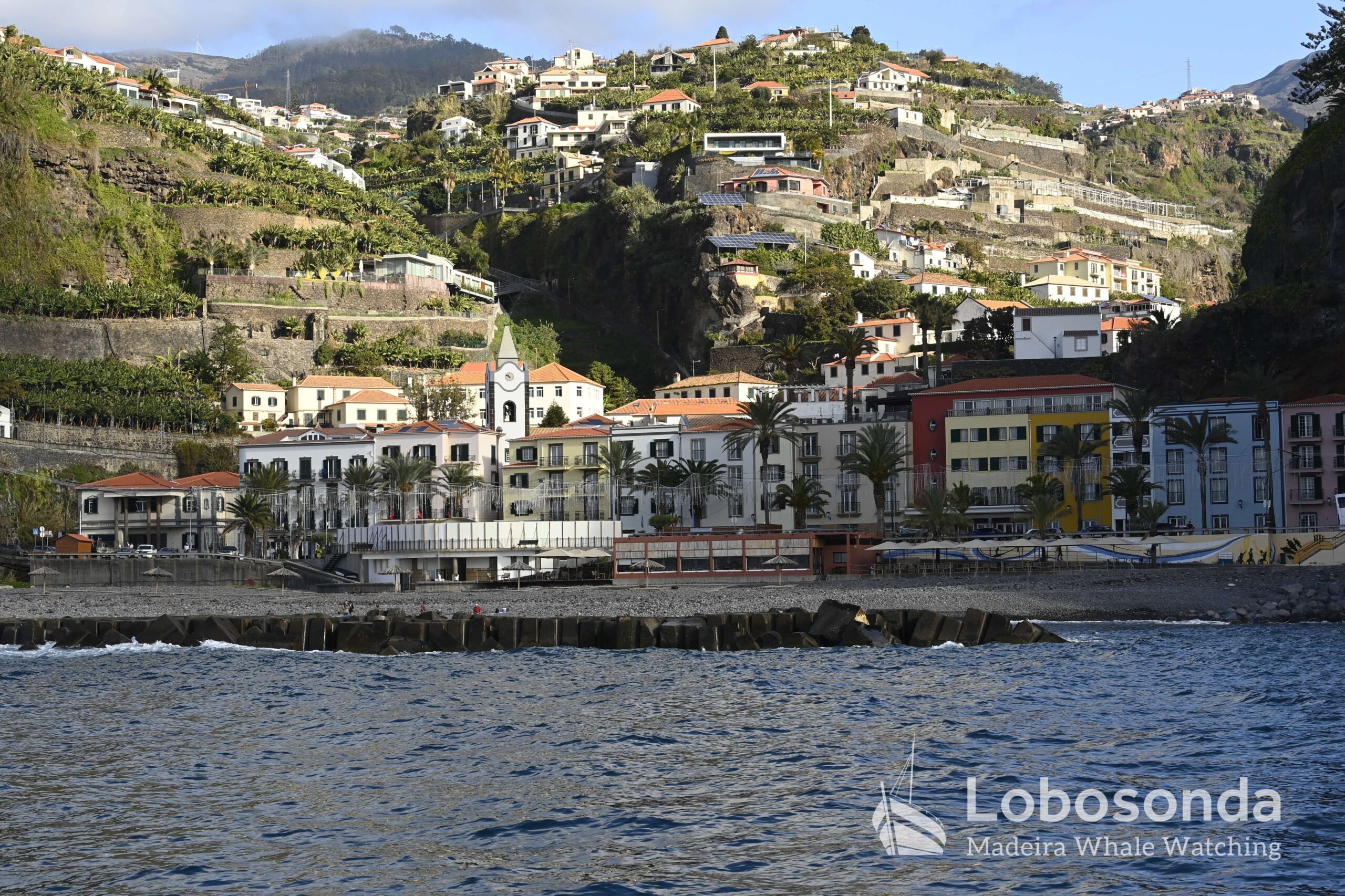
Ribeira Brava
09:00 no sighting
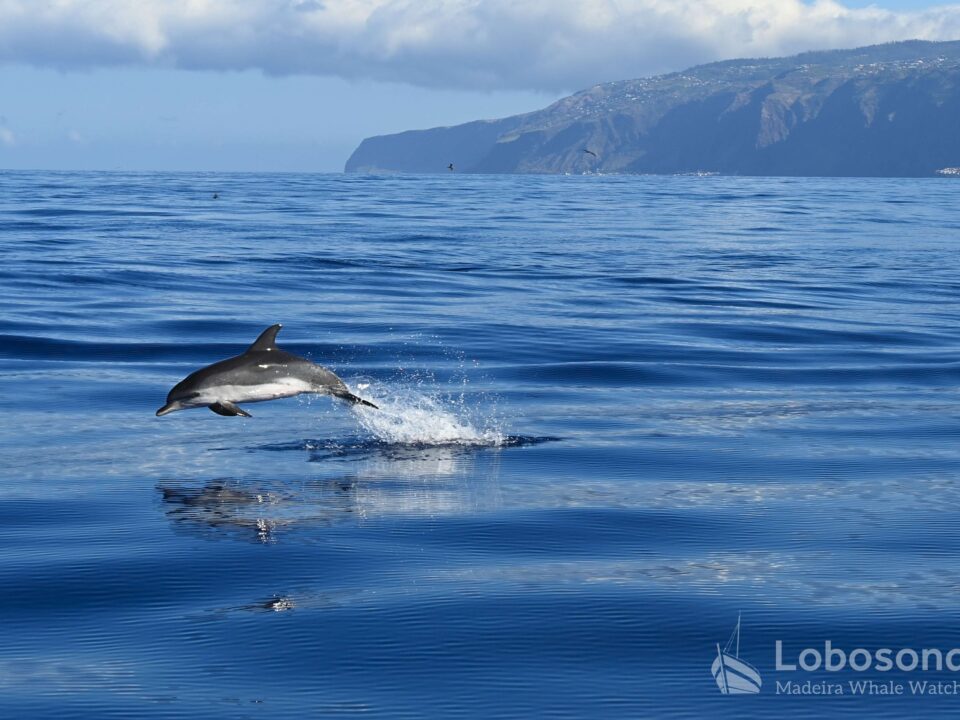
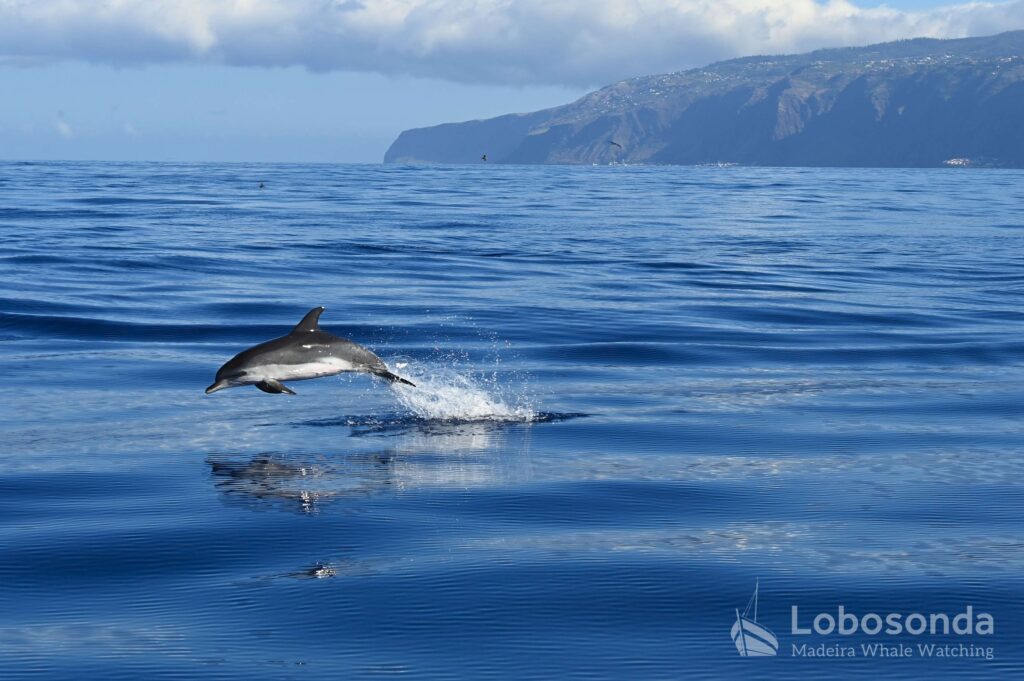
Stenella
09:30 Fin whale