BWB – First known landing on Madeira
February 8, 2026
BWB – The Influence of the Trade Winds on Madeira
February 12, 2026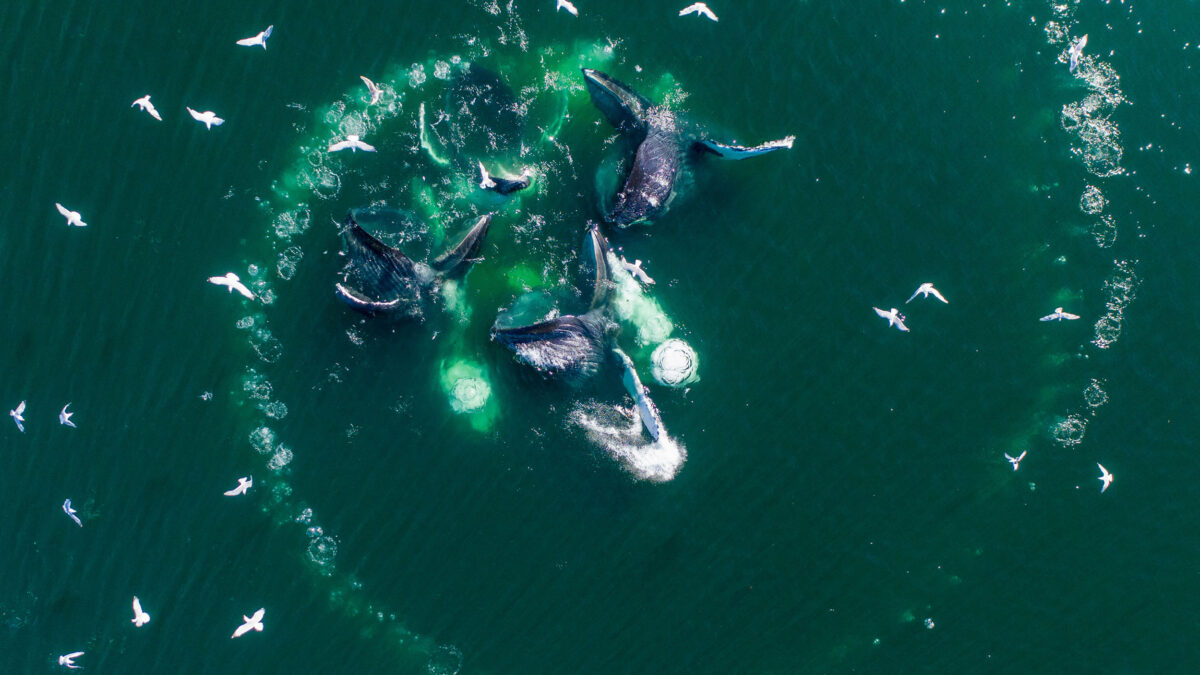
Humpback whales are among the most fascinating marine mammals in the world, not only because of their size but also because of their complex hunting techniques. They primarily feed on small fish, krill, and other tiny crustaceans. Over the course of evolution, they have developed highly sophisticated methods to catch their prey.
One of the best-known techniques is bubble net feeding. In this method, a group of humpback whales swims in circles while simultaneously blowing bubbles. The bubbles form a “net” that corrals the fish. The whales then rise from below and open their mouths wide to capture a large number of prey at once. This cooperative hunting requires precise coordination among the group members.
Individual whales also use the lobtailing or slapping technique, striking the water surface with their flukes or pectoral fins. This creates shockwaves that confuse the fish and cause them to cluster together. Humpback whales are also able to adapt their hunting strategies to different prey species and environments. Hunting near the coast differs from hunting in the open sea.
They also employ herding techniques, encircling prey in shallow bays. These strategies often require extended periods of effort and great patience. Their hunting methods are closely linked to their social behavior. The animals communicate through songs, clicks, and body movements to coordinate the group.
Young humpback whales learn hunting techniques from adults, allowing the transfer of cultural behaviors within populations. The hunting methods of humpback whales are an example of intelligence, cooperation, and adaptability in the animal kingdom. They demonstrate how closely social interaction and survival are connected.
Through these sophisticated strategies, humpback whales can efficiently gather food even under challenging and changing environmental conditions. These techniques make them one of the most effective and fascinating predators of the seas. Humpback whales remind us that adaptation, teamwork, and learning are essential for survival in nature.
© Photo by Hakai Magazine
By Fatima Kutzschbach