28.11.2025 – Eye spy
December 4, 2025
01.12.2025 – The dark side of fishing
December 7, 2025
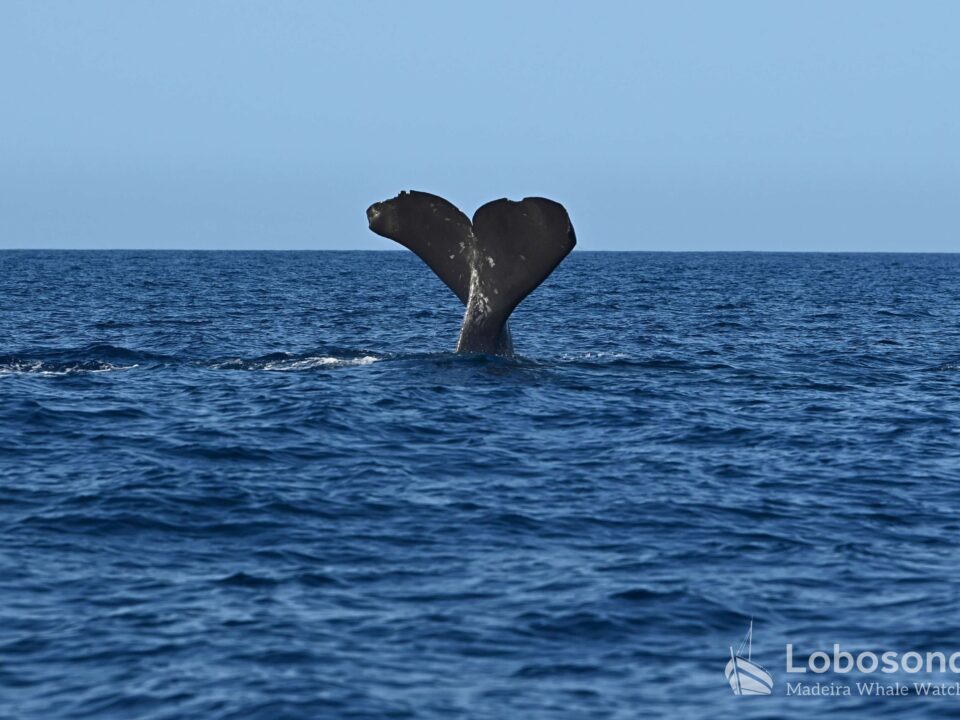
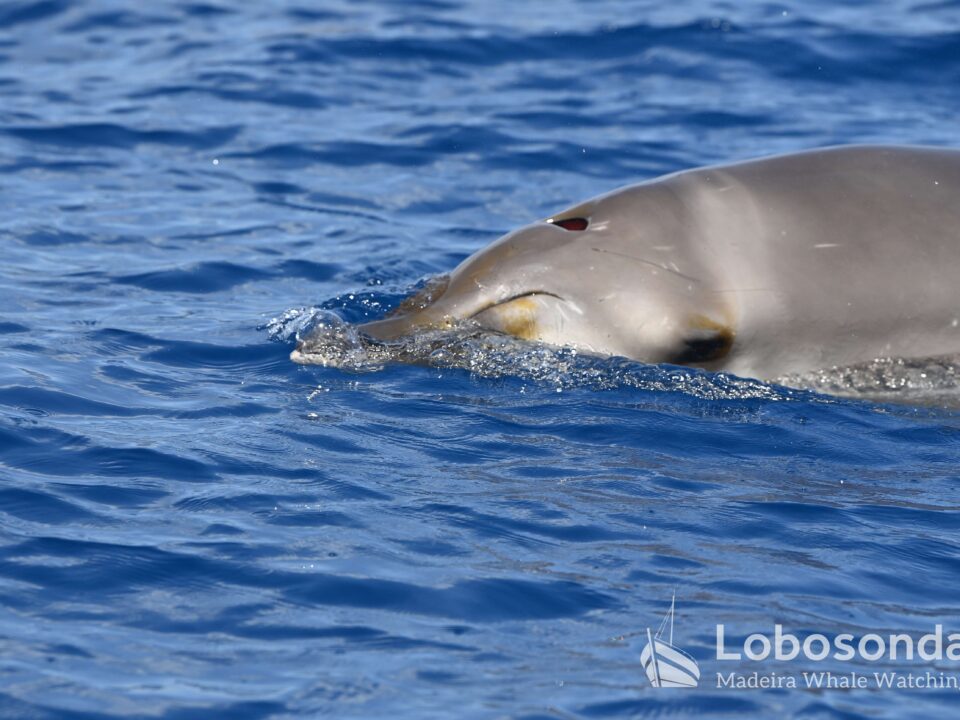
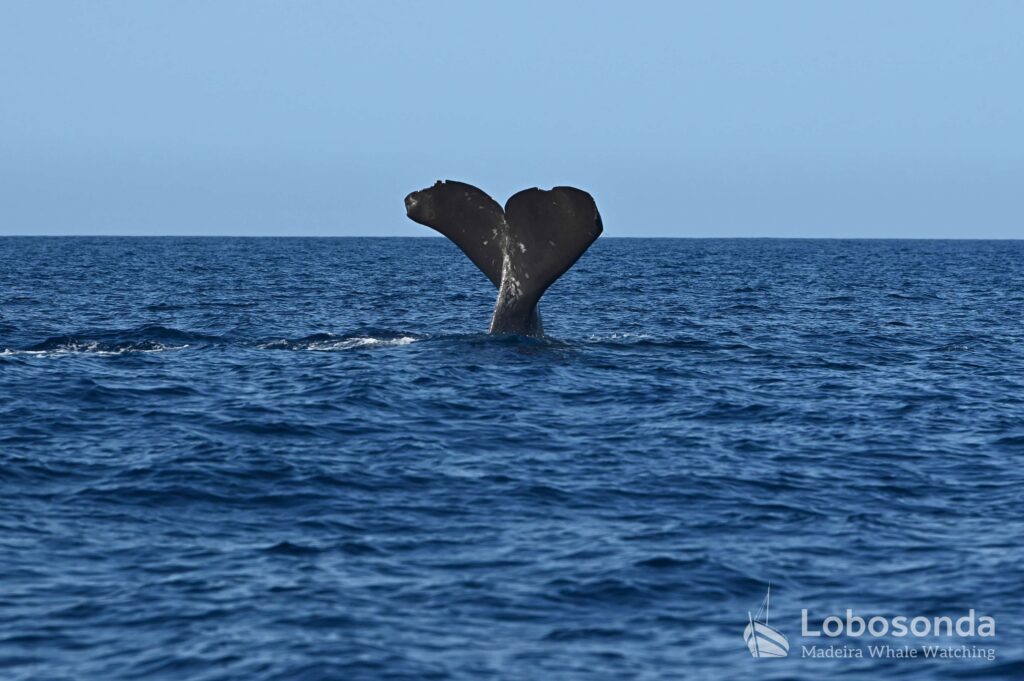
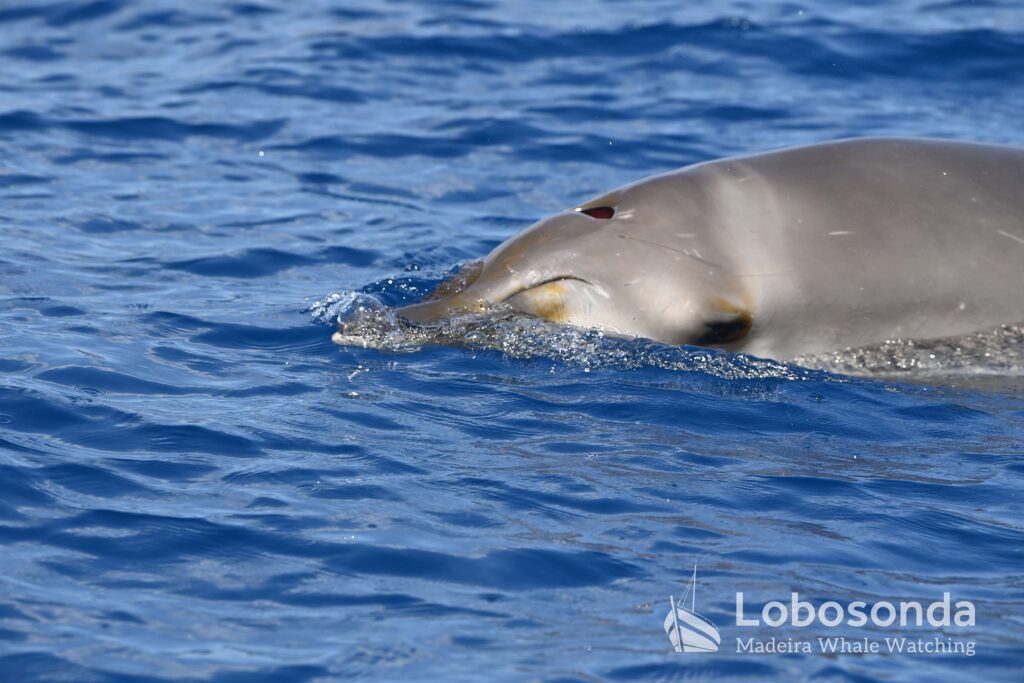
In the morning, the sea off Calheta was full of Sperm whales (Physeter macrocephalus). Our guests were able to observe one of these large toothed whales from particularly close up. A Sperm whale swam curiously toward the boat and lifted its enormous head out of the water. It almost seemed as if he were saying hello to us.
The spermaceti organ is a characteristic feature of the Sperm whale and occupies a large part of its massive head. It consists of the actual spermaceti organ and the so-called junk complex, both of which are filled with an oil-rich substance known as spermaceti. This oil possesses special physical properties: its density changes depending on temperature, which in turn affects its acoustic characteristics. Researchers believe that this plays a crucial role in the echolocation abilities of Sperm whales.
The animals produce clicking sounds that are focused and amplified by the spermaceti organ. In this way, sperm whales can precisely locate their prey, including large squid, at great depths. The strong concentration of sound waves also makes sperm whale clicks among the loudest animal sounds in the world. It is further assumed that the organ plays a role in communication among individuals. Another intriguing line of research explores whether the spermaceti organ helps regulate buoyancy, enabling the whales to perform their extraordinary deep dives.
Historically, spermaceti was highly sought after, especially between the 17th and 19th centuries, for use in candles, ointments, and technical lubricants. This demand led to intensive hunting of Sperm whales. Today, the species is protected, and spermaceti has lost its former economic value. Nevertheless, the spermaceti organ remains a fascinating subject of research, continuing to provide valuable insights into echolocation, evolution, and life in the deep sea.
On the midday tour, the situation had changed. The sea seemed completely deserted. Unfortunately, we returned to the harbor without any sightings.
By Fatima Kutzschbach
Sightings of the day
Ribeira Brava
13:00 no sighting
Stenella
09:30 Sperm whales
13:30 no sightings